
From Idea to Market, Stage 4, Preparing for Manufacturing and Launch
A working prototype proves that an idea can become a product. Manufacturing readiness proves that the product can be built consistently, inspected reliably, delivered economically, and supported after launch.
Reaching this point is a major milestone, but it is also where product development becomes less forgiving. Decisions that were easy to change during prototyping can become expensive once tooling is ordered, components are purchased, packaging is printed, and production begins.
The earlier stages of the process established whether the idea was worth pursuing, turned the concept into a practical product plan, and used prototypes to test critical assumptions. If you are joining the series here, start with Stage 1: validating the product idea, Stage 2: creating the product plan, and Stage 3: prototyping, testing, and early iteration.
A Working Prototype Is Not Yet a Manufacturing Plan
A prototype is usually built to answer specific questions. Does the mechanism work? Does the product fit the user? Can the electronics perform as intended? Is the concept intuitive enough for someone to use without extensive explanation?
Manufacturing introduces a different set of questions. Can the same product be produced repeatedly within acceptable tolerances? Are the specified materials available at the required volume? Can parts be assembled without excessive labor or specialized rework? Can each finished unit be inspected against a clear standard?
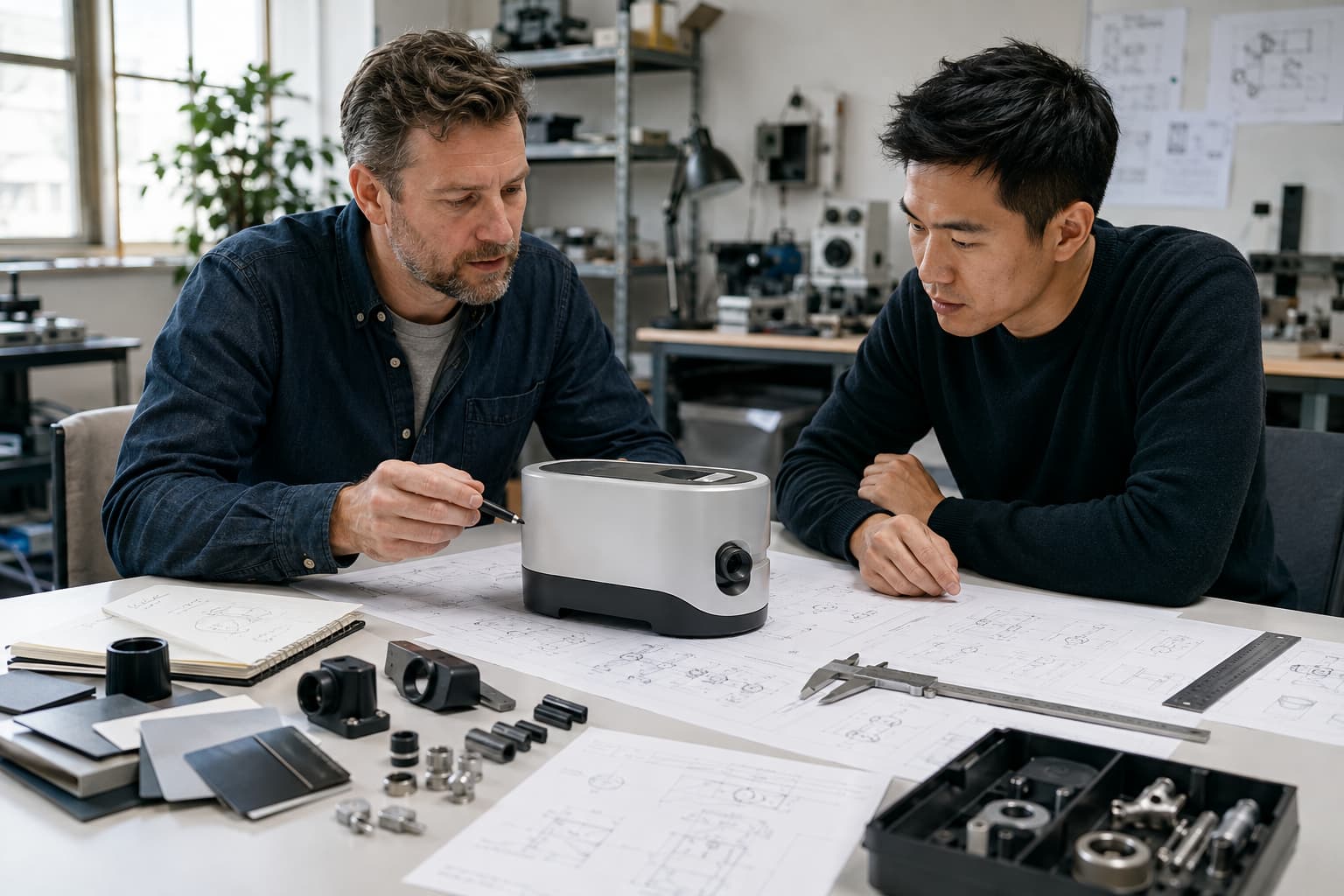 Manufacturing readiness is the coordinated work required to answer those questions before a full production commitment is made. It connects engineering, sourcing, documentation, quality, compliance, packaging, logistics, and launch planning.
The exact process varies by product. A simple molded accessory has different requirements from a connected electronic device, a children’s product, or a product with multiple suppliers. However, the underlying objective remains the same: replace informal assumptions with controlled specifications and repeatable processes.
Manufacturing Readiness Has Several Layers
- Design readiness: The product geometry, materials, components, tolerances, and performance requirements are controlled.
- Supplier readiness: Vendors can meet the required quality, volume, lead time, and cost targets.
- Process readiness: Assembly, inspection, testing, and packaging steps are documented and repeatable.
- Compliance readiness: Applicable testing, labeling, certification, and recordkeeping requirements have been identified.
- Launch readiness: Inventory, fulfillment, support, pricing, marketing, and post-launch feedback processes are prepared.
Stabilize the Product Design
Preparing for manufacturing does not mean declaring the design finished simply because the latest prototype works. It means reviewing the design as a production system rather than as a single successful unit.
This review should examine materials, wall thicknesses, fasteners, component placement, tolerances, assembly access, finishing requirements, and potential failure points. Small design choices can have large effects on tooling cost, scrap rates, assembly time, and long-term reliability.
This is where design for manufacturing becomes essential. Engineers and manufacturing partners should identify features that are difficult to produce, tolerances that are tighter than necessary, components with long or unstable lead times, and assembly steps that create avoidable labor.
Design changes are still possible at this stage, but they should be deliberate and controlled. Each revision needs to be documented so the manufacturer, suppliers, quality team, and product team are all working from the same version.
Build the Production Documentation
A manufacturer cannot reliably reproduce a product from a prototype alone. The production package needs to communicate exactly what should be built and how the finished product will be evaluated.
Depending on the product, that package may include:
- Released CAD files and engineering drawings
- A complete bill of materials
- Approved materials, finishes, and component specifications
- Assembly instructions and process requirements
- Critical dimensions and acceptable tolerances
- Functional test procedures
- Quality-control checkpoints
- Packaging, labeling, and carton specifications
- Revision history and change-control records
The bill of materials deserves particular attention. Part numbers, approved suppliers, quantities, substitutions, lead times, and minimum order requirements should be understood before purchase orders are placed. An inexpensive component can still become a serious problem if it is difficult to source or available from only one supplier.
Choose Manufacturing Partners for the Actual Product
The lowest quoted unit price does not automatically represent the best manufacturing option. Quotes may be based on different assumptions about tooling, inspection, packaging, shipping, scrap, testing, or order volume.
A useful supplier evaluation looks beyond price to determine whether the manufacturer has relevant process experience, appropriate equipment, sufficient capacity, dependable quality systems, responsive communication, and a practical plan for resolving problems.
The NIST Manufacturing Extension Partnership provides resources and access to manufacturing specialists for small and midsize U.S. manufacturers. Resources like these can be useful when evaluating production capabilities, improving processes, or identifying qualified suppliers.
Before making a production commitment, teams should also understand tooling ownership, payment terms, intellectual property protections, change-order procedures, minimum order quantities, lead times, and the manufacturer’s responsibilities when parts fail inspection.
Define Quality Before Production Begins
Quality cannot be added after a production run is complete. The team must define what an acceptable unit looks like before the manufacturer begins building at volume.
That includes measurable acceptance criteria for critical dimensions, appearance, fit, function, assembly, durability, and packaging. Whenever possible, inspection standards should be objective. Terms such as “high quality” or “clean finish” are open to interpretation unless they are supported by samples, drawings, photographs, measurements, or defect classifications.
The product may also require regulatory testing or certification. Requirements depend on the product category, intended users, materials, electronics, wireless features, and markets where it will be sold. For example, the U.S. Consumer Product Safety Commission explains that many consumer products must be tested for compliance with applicable safety requirements, with certification required for regulated products.
Compliance work should be identified early enough to influence the design and launch schedule. Discovering a testing requirement after tooling or production can force redesigns, delays, and unexpected expenses.
Use a Pilot Build to Test the Production System
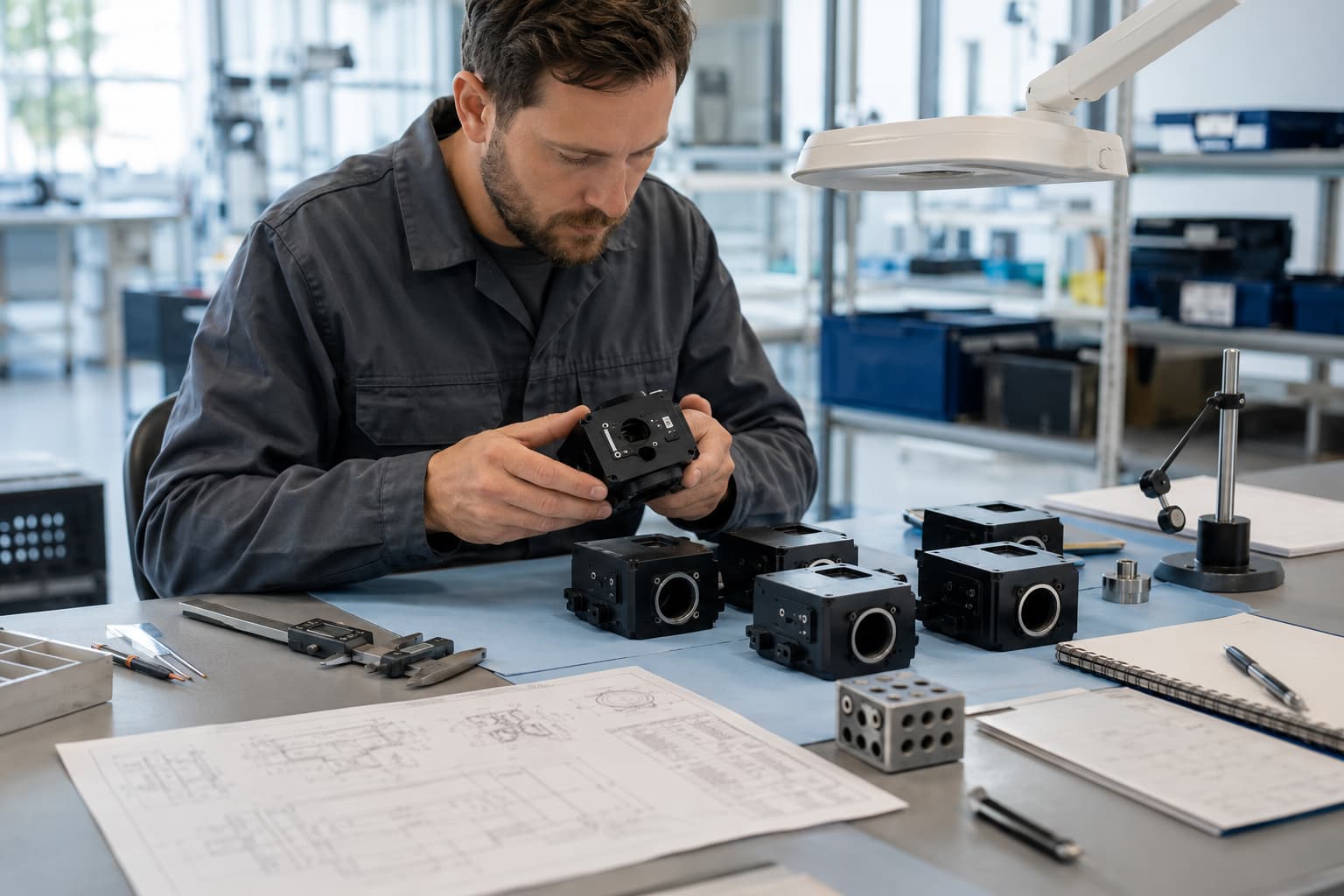 A pilot build, sometimes called a pre-production run, is a controlled opportunity to test more than the product. It tests the manufacturing process itself.
The team can observe whether work instructions are clear, tools and fixtures perform correctly, assembly steps occur in the right order, cycle times are realistic, and inspection methods catch meaningful defects. The resulting units can also support final validation, packaging evaluation, photography, sales samples, training, or limited market testing.
Problems found during a pilot build are not a failure. Finding them is the purpose of the build. A recurring assembly mistake may point to unclear instructions, an awkward part orientation, insufficient fixturing, or a design feature that invites incorrect installation.
The key is to resolve those problems before increasing volume. Moving directly from a hand-built prototype to a large purchase order removes the controlled learning step and increases the financial impact of every unresolved issue.
Prepare the Entire Launch System
Manufacturing readiness and launch readiness should develop together. Producing inventory without a complete plan for receiving, storing, selling, shipping, supporting, and replenishing it creates a different kind of risk.
Before launch, the team should confirm:
- Final unit economics and pricing
- Production and replenishment lead times
- Inventory receiving and storage procedures
- Packaging and shipping configurations
- Order fulfillment responsibilities
- Warranty, returns, and replacement policies
- Customer support documentation
- Installation or user instructions
- Product photography and sales materials
- A process for collecting and reviewing early customer feedback
Forecasting also matters. Ordering too little can create stockouts and long customer wait times. Ordering too much can lock cash into inventory before demand is proven. The initial production quantity should reflect supplier constraints, expected demand, available capital, storage capacity, and the team’s confidence in the current design.
Know When the Product Is Ready to Advance
A product is ready to move toward manufacturing when the team has more than a successful prototype. The design is controlled, the production package is complete, suppliers understand the requirements, quality standards are measurable, compliance needs have been addressed, and a pilot build has demonstrated that the process can produce acceptable units.
Not every uncertainty must disappear. Physical products continue to improve after launch. The goal is to reduce the unresolved risks that could compromise safety, function, quality, cost, delivery, or customer experience.
For a closer look at the transition from a prototype into scalable production, read Prototype to Manufacturing: What Has to Happen Before You Scale?
Manufacturing and launch are not separate finish lines. They are connected systems. When engineering, production, quality, sourcing, and commercialization are planned together, a product has a much stronger chance of reaching customers in the form the team originally intended.
Prepare Your Product for Manufacturing
Ahdept helps founders and product teams move from tested prototypes into manufacturing preparation, supplier coordination, production planning, and market launch.
Our Office
450 N. Flint Street
Kaysville, UT 84037, USA
Contact Us
(385) 566-1877
info@ahdept.com
Careers
Office Hours
Mon-Fri: 8am - 5pm
Sat-Sun: Closed