From Idea to Market, Stage 3, Prototyping, Testing, and Early Iteration
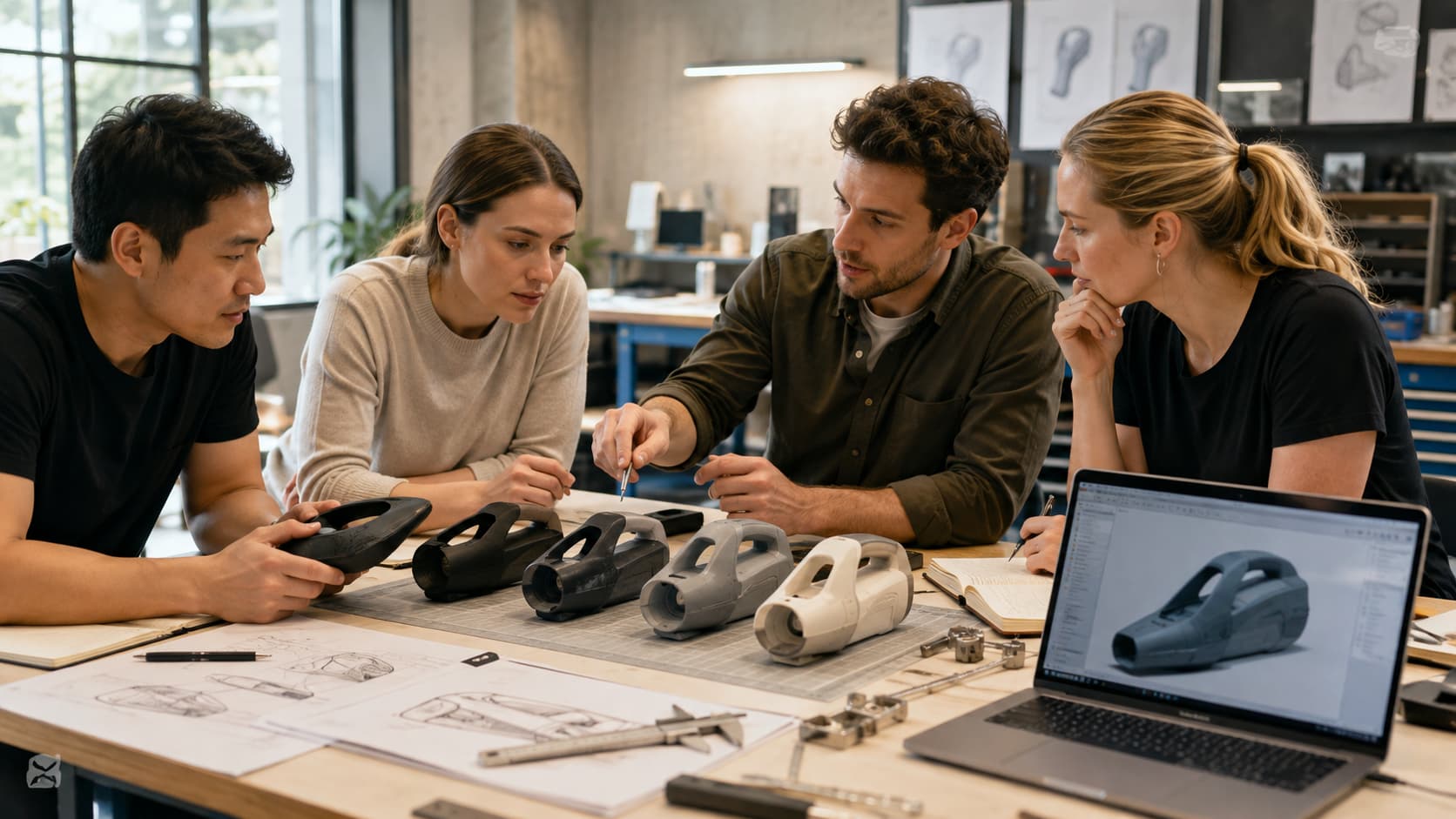 Once a product idea has been validated and turned into a real development plan, the next step is not to build the final product. It is to start learning through prototypes. Rapid prototyping, testing, and early iteration help expose bad assumptions while the product is still flexible enough to change.
This is Stage 3 in the journey from idea to market. Stage 1 established whether the idea deserved deeper investment. Stage 2 turned that direction into requirements, priorities, and a product plan. Now the work becomes physical, technical, and much harder to fake.
A prototype gives the team something real to react to. Dimensions that looked right on paper may feel wrong in the hand. Features that sounded necessary may prove unnecessary. Assembly ideas may become obviously complicated. Testing turns assumptions into evidence, and iteration turns that evidence into a better product.
Table of Contents
What Prototyping Is Actually For
A prototype is a learning tool. That sounds simple, but teams often lose sight of it because building something physical feels like progress toward a finished product.
The goal of an early prototype is not necessarily to look polished. It is to answer questions.
Can the mechanism work? Does the size feel right? Can a user understand what to do? Does the product need all of its current parts? Are the controls in the right place? Is an assembly idea practical? Does the product still make sense once the concept moves off the page?
The answers determine what gets built next.
NIST describes prototyping as part of a broader product design and development process that can help manufacturers validate products, select materials, test durability, and move ideas toward manufacturing and distribution. NIST’s product design and development overview reinforces an important point: prototyping is part of a process, not a single milestone.
Different Prototypes Can Answer Different Questions
- Appearance prototype: Does the size, shape, and visual direction make sense?
- Functional prototype: Can the core mechanism or technology actually work?
- User prototype: Can someone interact with the product naturally?
- Engineering prototype: How do components, materials, and assemblies behave together?
- Pre-production prototype: Is the design getting close enough to begin thinking seriously about production?
Trying to make one prototype answer every question usually makes the prototype slower and more expensive than it needs to be.
What Rapid Prototyping Services Should Help You Learn
The real value of rapid prototyping services is not simply speed. It is the ability to shorten the distance between an assumption and an answer.
If changing a part takes weeks, teams are naturally tempted to make fewer changes. If a new enclosure, bracket, interface, or assembly can be produced quickly, the team can test more possibilities before committing to expensive decisions.
That matters because product development is full of things that cannot be judged confidently on a screen.
A handle can look proportional in CAD and still feel awkward. A button can appear obvious in a rendering and confuse actual users. A housing can seem simple until someone has to assemble the components inside it.
Fast prototypes let those discoveries happen earlier.
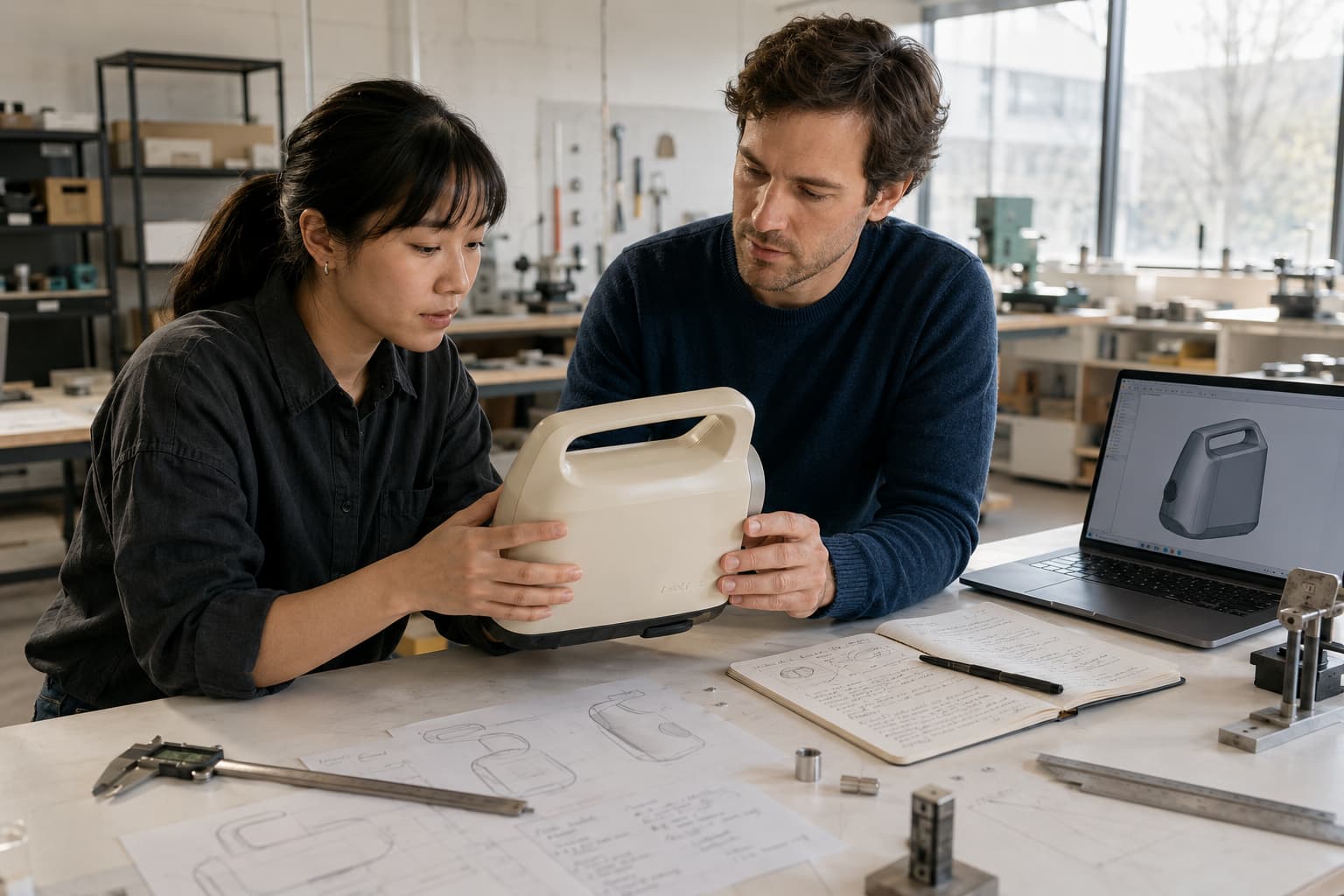 The important word is not necessarily rapid. It is iteration. Speed matters because it allows the team to cycle through better questions more quickly.
Build, Test, Learn, Repeat
Healthy product development rarely follows a straight line from drawing to prototype to finished product. Instead, the early process tends to loop.
- Build something that answers a specific question.
- Test it against the requirement or assumption.
- Record what worked and what failed.
- Change the design based on what you learned.
- Build the next version.
The discipline is in making each cycle intentional.
If version two changes ten things at once, the team may not know which change actually improved the product. If every prototype is treated casually, useful observations disappear into conversations and memory. If no one defines what a prototype is supposed to prove before it is built, testing becomes subjective.
Simple documentation helps. Keep notes on what changed, why it changed, what was tested, and what happened. Over time, that record becomes part of the product’s development history and helps prevent old problems from quietly returning.
What Should You Test?
Testing should follow the risks in the product. Different products create different questions, but most physical product teams should think across several areas.
Function
Does the core idea actually work? If the product’s primary function is unreliable, nothing else matters yet.
User interaction
Can someone use the product without the founder standing nearby explaining it? Observe what users actually do, not what they say they would do.
Fit and ergonomics
Dimensions, weight, grip, reach, placement, and physical interaction can all change once the product exists in the real world.
Assembly
Even an early prototype can reveal whether parts are awkward to align, difficult to access, unnecessarily complicated, or likely to create problems later.
Durability
What happens when the product is dropped, flexed, opened repeatedly, carried, exposed to heat, or used in the way real customers will actually use it?
Assumptions
Some of the most important testing has nothing to do with failure. A prototype may reveal that an entire feature is unnecessary. Removing complexity can be just as valuable as fixing it.
A Better Question Than “Does It Work?”
Instead of asking whether a prototype works, ask what you need to learn from it.
- What are we uncertain about?
- What would cause us to change the design?
- What is the cheapest way to test that assumption?
- What result would tell us we are ready for the next version?
Common Early Iteration Mistakes
One mistake is making the prototype too polished too early. A beautiful prototype can create emotional resistance to change. Founders start protecting the prototype instead of questioning it.
Another mistake is optimizing details before proving fundamentals. Spending days refining surface finishes makes little sense if the product’s basic geometry or mechanism is still unresolved.
A third mistake is treating every piece of feedback equally. Product teams need to distinguish between preference and evidence. One person’s color opinion is different from multiple users being unable to understand a core interaction.
Finally, teams sometimes stop iterating because the prototype finally works once. That is progress, but repeatability matters. The question is not whether someone can make it work under controlled conditions. The question is whether the design is becoming consistently understandable, functional, and practical.
When Is the Prototype Ready to Move Forward?
There is no magic prototype number. Some products need a handful of iterations. Others go through dozens of changes before the team has enough confidence to advance.
The better indicator is whether the largest uncertainties are shrinking.
You should understand the core function. The important dimensions and interactions should be stabilizing. Major usability problems should have surfaced. Engineering decisions should be becoming more deliberate. The product should be moving from “Can this work?” toward “How should we build this well?”
That distinction matters because the next stage introduces a different set of pressures. Manufacturing methods, production economics, sourcing, quality, packaging, and launch planning begin to matter much more.
If you are joining the series here, start with Stage 1, How to Validate a Product Idea Before You Build, then continue with Stage 2, How to Turn Early Concepts Into a Real Product Plan.
For a deeper look at what happens as prototypes begin approaching production, Prototype to Manufacturing, What Has to Happen Before You Scale? covers that transition in more detail.
Stage 3 is where an idea stops being theoretical. The prototype does not need to prove that everything is finished. It needs to make the next decision smarter.
Build Fast Enough to Learn
If your product has moved beyond the concept stage and needs focused prototyping, testing, and iteration, Ahdept can help turn the product plan into something you can build, evaluate, and improve.
FAQ
What is rapid prototyping?
Rapid prototyping is the process of creating physical or functional versions of a product quickly so a team can test ideas, identify problems, and improve the design before committing to later development stages.
Why is rapid prototyping important in product development?
It shortens the time between making a design assumption and learning whether that assumption is correct. Faster feedback allows teams to make better decisions before changes become expensive.
How many prototypes should a product go through?
There is no fixed number. A product should continue iterating until the major questions around function, usability, fit, engineering, and basic viability have been answered well enough to justify the next development stage.
Does a working prototype mean a product is ready for manufacturing?
No. A working prototype proves that important parts of the concept can work. Manufacturing introduces additional requirements around repeatability, materials, tolerances, sourcing, assembly, cost, and quality.
Our Office
450 N. Flint Street
Kaysville, UT 84037, USA
Contact Us
(385) 566-1877
info@ahdept.com
Careers
Office Hours
Mon-Fri: 8am - 5pm
Sat-Sun: Closed