
From Idea to Market, Stage 2, How to Turn Early Concepts Into a Real Product Plan
From Idea to Market Series · Stage 2 of 4
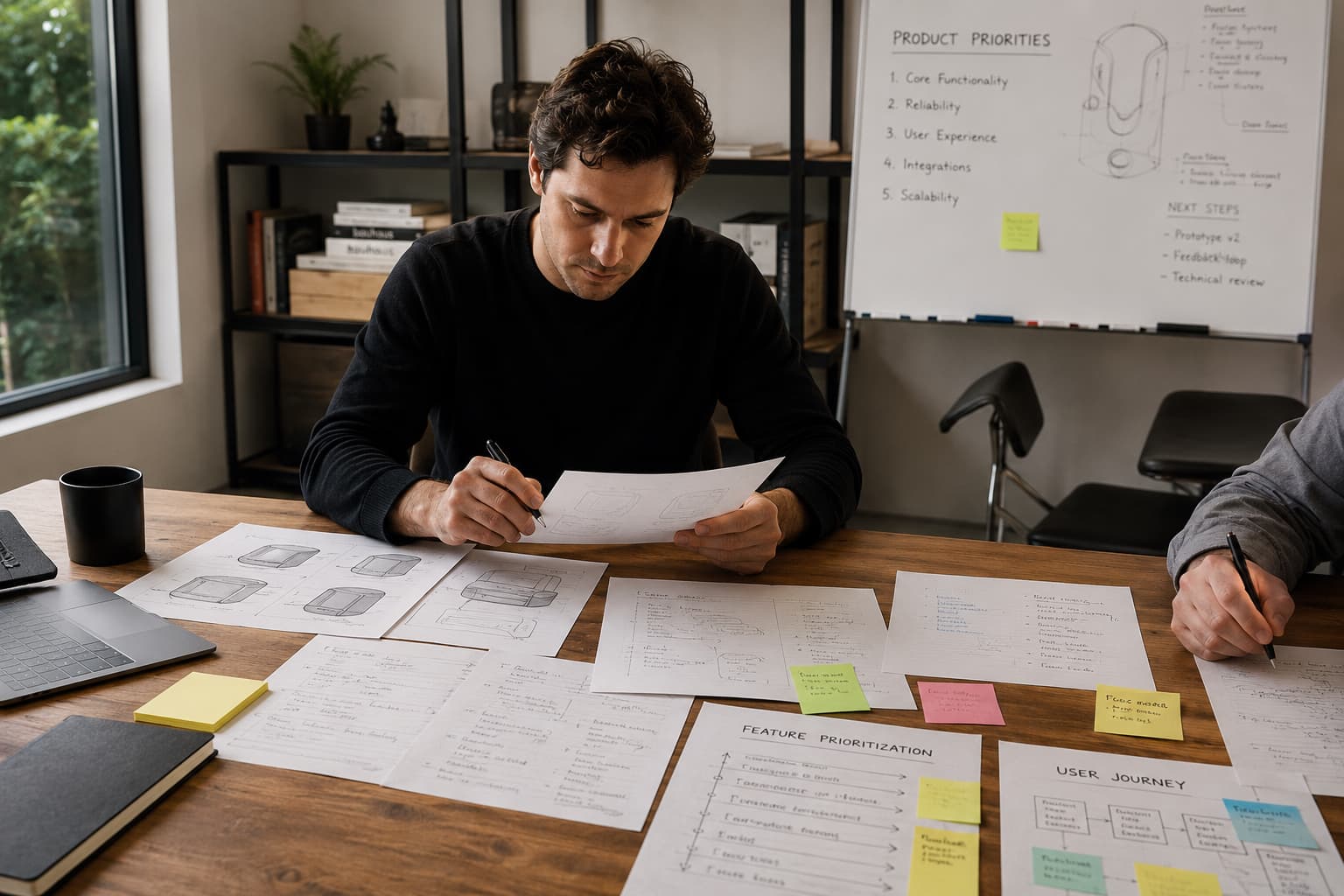 A good product concept is not the same thing as a real product plan. Before design, prototyping, or manufacturing work can move forward intelligently, the concept has to become clearer, more specific, and more testable. That means turning loose ideas into requirements, tradeoffs, priorities, and a roadmap the team can actually build from.
Founders often get stuck in the middle ground between inspiration and execution. They know what they want the product to do, and they may even have sketches, notes, reference images, or rough mockups. But none of that automatically tells a product team what needs to be built first, what matters most, what can wait, or what the product actually requires to succeed.
This is Stage 2 in the broader journey from idea to market. Stage 1 is about validating whether the idea deserves deeper investment. Stage 2 is about turning that validated direction into something structured enough to guide real development.
Table of Contents
Why Concepts Are Not the Same as Plans
A concept explains the direction. A product plan explains what the team is actually going to do with that direction.
That difference matters because most early concepts still contain a mix of assumptions, preferences, guesses, and untested ideas. A founder may say the product needs to be simple, premium, durable, portable, affordable, easy to manufacture, and better than everything already on the market. That is understandable, but it is not yet a plan. It is a wish list.
A real product plan starts forcing decisions. What problem matters most? Which user matters first? What core function has to work before anything else? What constraints matter now? What is essential for version one, and what belongs later?
Without those decisions, development gets muddy fast. Teams burn time on the wrong details, important questions stay unresolved, and the product starts drifting before it has even really begun.
What a Real Product Plan Needs
At a minimum, a useful product plan should give the team enough clarity to make better decisions consistently.
- A clear product objective: What is this product meant to do, and for whom?
- A defined user: Who is the core buyer or user for the first version?
- Core requirements: What must the product do to succeed?
- Constraints: What limits already matter, such as cost, size, materials, complexity, or manufacturing reality?
- Priorities: Which features or capabilities are essential, and which are optional?
- Milestones: What should be proven or completed next?
This is not about making the project rigid too early. It is about creating enough structure that the work can move forward without constant confusion.
How to Turn Concepts Into Requirements
The shift from concept to product plan usually happens by translating broad intentions into specific requirements and decisions.
For example, “portable” is not a requirement by itself. It becomes more useful when translated into something more concrete, like target dimensions, weight limits, battery expectations, or carry use cases. “Easy to use” becomes more useful when the team defines who the user is, what actions they need to take, and what friction the product needs to remove.
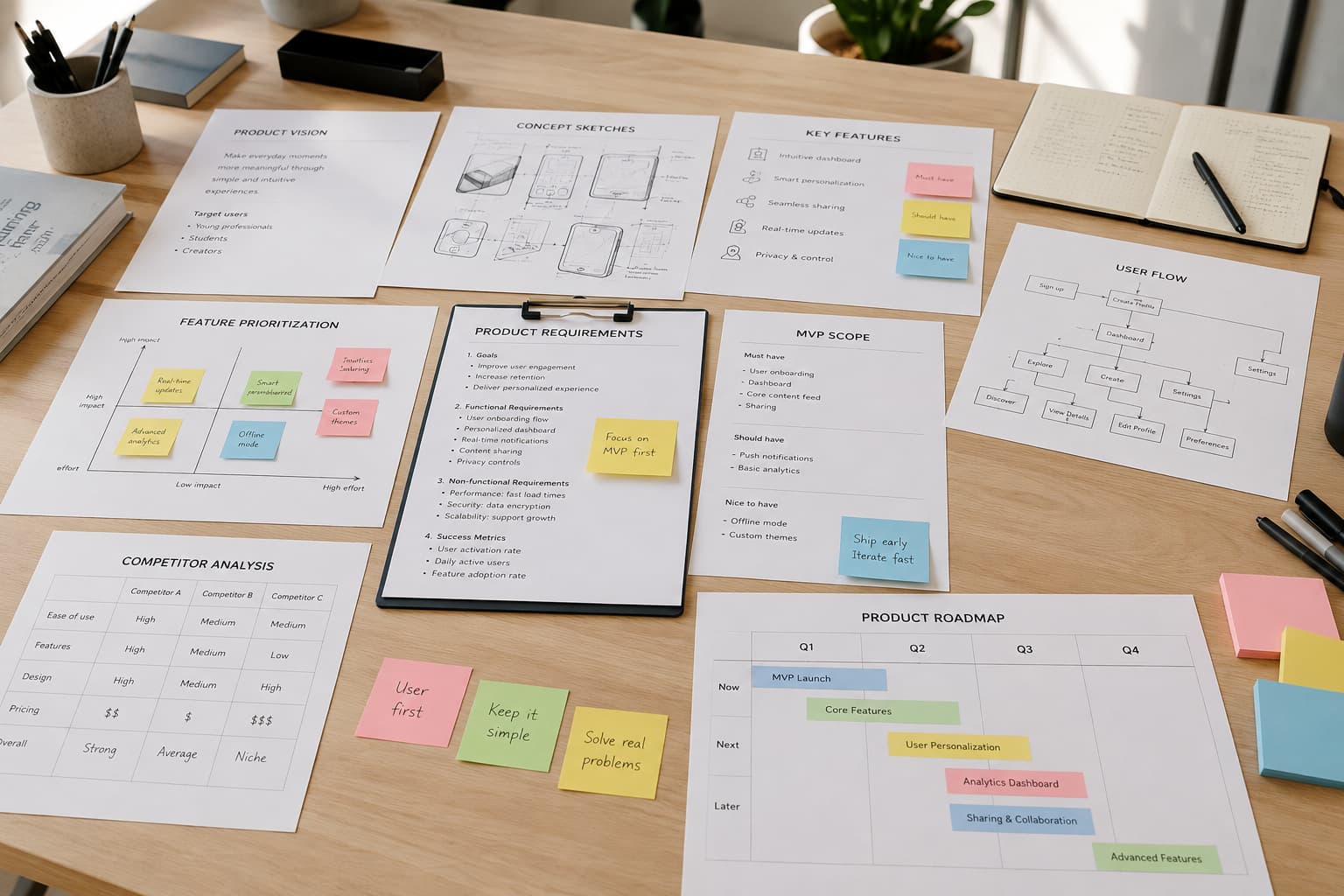 This is where early concepts begin to mature. A strong planning process asks questions like:
- What does the product absolutely need to do?
- What conditions does it need to perform under?
- What customer expectations are non-negotiable?
- What technical or business constraints already shape the design?
- What should be left out of the first version?
That last question is especially important. Many weak product plans fail because they try to preserve every idea instead of protecting the core idea. The goal is not to keep everything alive. The goal is to define what matters enough to build around.
Requirements should help the team make tradeoffs
The best requirements do more than describe the product. They help the team choose between competing options later.
If a product needs to hit a certain price range, that changes design choices. If a product has to work in a particular environment, that affects materials and testing. If a feature creates too much complexity for too little value, a good product plan helps the team cut it without losing the product’s core purpose.
This is one reason structured planning matters before expensive development work begins. A good plan creates discipline around tradeoffs instead of forcing every decision to be reinvented later.
Where Founders Usually Go Wrong
One common mistake is mistaking detail for clarity. A founder may have pages of notes, inspiration boards, sketches, feature ideas, and competitor screenshots, but still not have a clear product plan. Volume is not the same as structure.
Another mistake is trying to solve too much in version one. Early concepts often become bloated because every possible use case gets dragged into the first product plan. That usually creates a weaker starting point, not a stronger one.
A third mistake is separating the concept from real-world constraints. A product plan has to live in reality. That means the team should already be thinking about manufacturability, likely complexity, likely cost pressure, and whether the product can become something buildable. This is where the concept work begins to connect directly to later development and DFM decisions.
The SBA’s market research guidance is useful here because it reinforces that ideas get stronger when they are pressure-tested against customer need, competition, and business reality rather than internal enthusiasm alone. That makes a good reminder that product planning should stay connected to the market, not just the internal vision.
Signs Your Concept Is Still Too Loose
- You cannot explain the first version of the product in simple terms.
- You keep adding features instead of prioritizing them.
- You have not defined what success looks like for version one.
- You do not know which constraints already matter.
- You have sketches and ideas, but no clear development priorities.
What Comes Next After the Plan
Once the concept becomes a real product plan, the work gets much easier to sequence. The team can move into more focused design, prototyping, technical evaluation, and early manufacturability thinking with a better sense of purpose.
This is also where the product plan becomes the bridge between validation and execution. Validation told you whether the idea deserved more serious attention. The plan tells you what that attention should actually focus on.
If you have not read Stage 1 yet, start with How to Validate a Product Idea Before You Build. If you want a broader explanation of what happens when a product moves into deeper execution, What Does a Product Development Company Actually Do? is a useful next read. And if you want the manufacturability side of that conversation, Design for Manufacturing Explained for Founders and Product Teams connects directly to what happens after the plan becomes real.
That is the real purpose of Stage 2. It takes an idea that survived early validation and gives it enough structure to become buildable.
Turn the Concept Into a Real Product Plan
If your idea has promise but still feels too loose to build from, Ahdept can help turn that early concept into something clearer, more practical, and more ready for real development.
FAQ
What is the difference between a concept and a product plan?
A concept is an early direction or idea. A product plan translates that direction into requirements, priorities, constraints, and milestones that a team can actually build from.
How do you turn an idea into a product plan?
You do it by clarifying the user, core function, requirements, constraints, priorities, and next milestones. The goal is to create enough structure that the product can move into design and development without drifting.
Why is planning important before prototyping?
Because prototyping without a real plan often wastes time and money. A clearer product plan helps the team decide what should be built, tested, and prioritized first.
What should be included in an early product plan?
An early product plan should usually include the product objective, target user, core requirements, constraints, feature priorities, and next milestones for development.
Our Office
450 N. Flint Street
Kaysville, UT 84037, USA
Contact Us
(385) 566-1877
info@ahdept.com
Careers
Office Hours
Mon-Fri: 8am - 5pm
Sat-Sun: Closed