From Idea to Market, Stage 1, How to Validate a Product Idea Before You Build
From Idea to Market Series · Stage 1 of 4
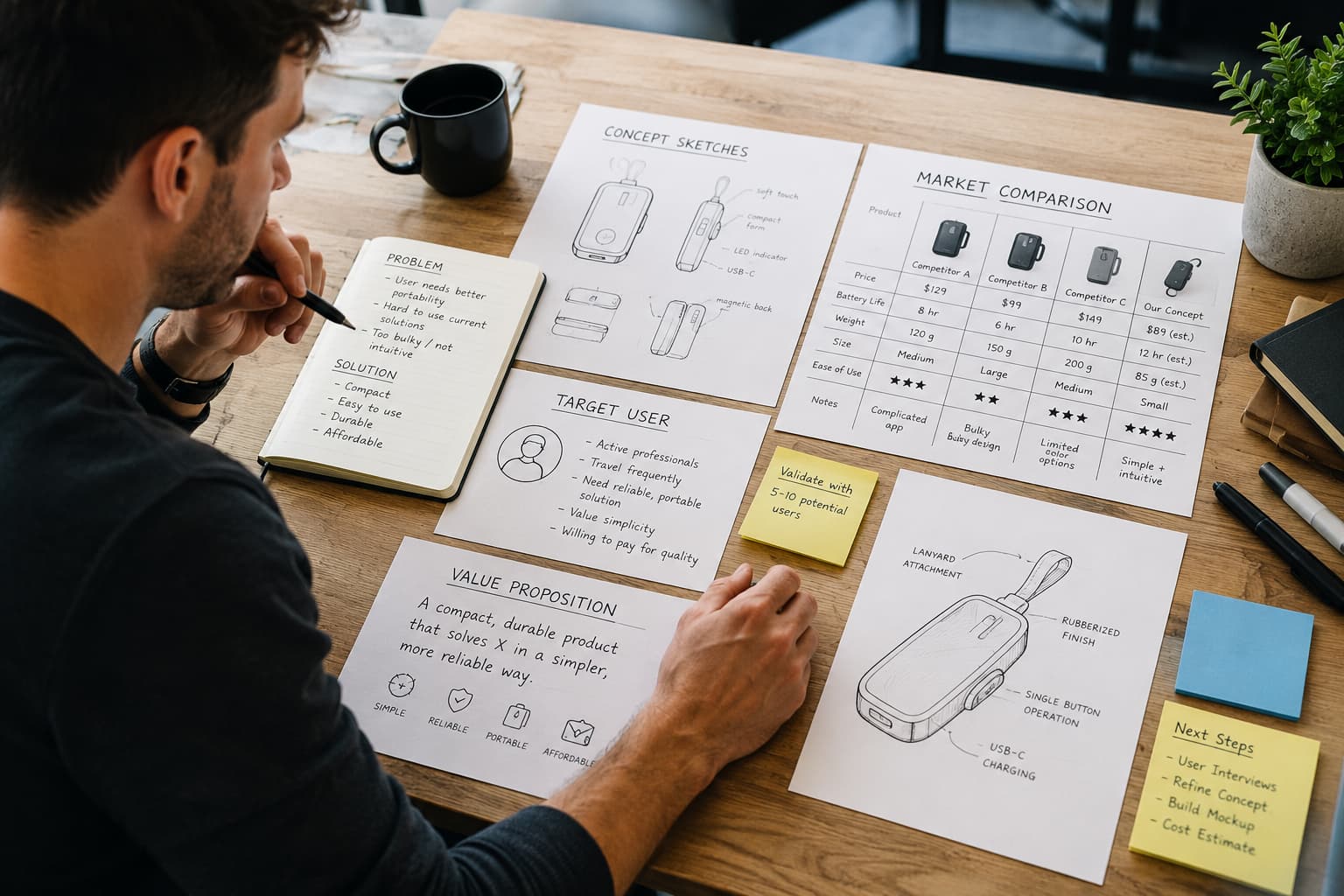 The fastest way to waste money in product development is to build before you have validated what you are building, who it is for, and why they would care. Before prototypes, tooling, patents, or manufacturing conversations, founders need clearer evidence that the idea solves a real problem and has a believable path forward.
A lot of product ideas feel exciting at the beginning because the founder can already see the finished thing in their head. That vision matters, but it is not validation. Validation is what happens when the idea is tested against customer need, market context, alternatives, pricing reality, and the practical limits of execution.
This is the first stage in the broader journey from idea to market. If the foundation is weak here, every later step gets more expensive.
Table of Contents
What Validation Actually Means
Product idea validation does not mean proving that everyone will buy your product. It means reducing uncertainty before expensive development begins.
The SBA says market research helps businesses find customers, and that it blends consumer behavior and economic trends to confirm and improve a business idea. It also says market research helps reduce risk early. That guidance from the SBA is a useful frame for founders because validation is really about confirming whether the idea deserves the next level of investment.
In product terms, that usually means answering a few basic questions:
- What problem is this product solving?
- Who feels that problem strongly enough to care?
- How are they solving it today?
- Why would this product be meaningfully better?
- Is the product realistic to build, price, and support?
If those questions are still fuzzy, the smartest move is usually not “start building.” It is “learn more first.”
“Founders often want validation to feel like a green light. It is usually more useful as a filter. The real value is not hype. It is finding out early whether the idea is strong enough to deserve deeper development.”
Chandler Read
General Manager, Ahdept
What to Test Before You Build
Before development starts, founders should try to validate four things as clearly as possible.
- The problem: Is the pain point real, recurring, and meaningful?
- The customer: Is there a specific type of buyer or user who clearly needs this?
- The alternative: What is the current workaround, substitute, or competing product?
- The value: Why would someone switch, pay attention, or spend money?
That does not require a giant research project. It does require discipline. Early conversations, market scans, competitive review, pricing comparisons, concept feedback, and founder honesty can go a long way if they are done seriously.
How Founders Usually Get This Wrong
The most common mistake is validating the product with the wrong people. Friends, family, and casual observers often respond to the founder’s enthusiasm, not the actual strength of the concept. That kind of feedback can be encouraging, but it is weak evidence.
Another mistake is confusing compliments with buying intent. People may say an idea is clever, interesting, or useful without ever becoming the kind of customer who would actually pay for it.
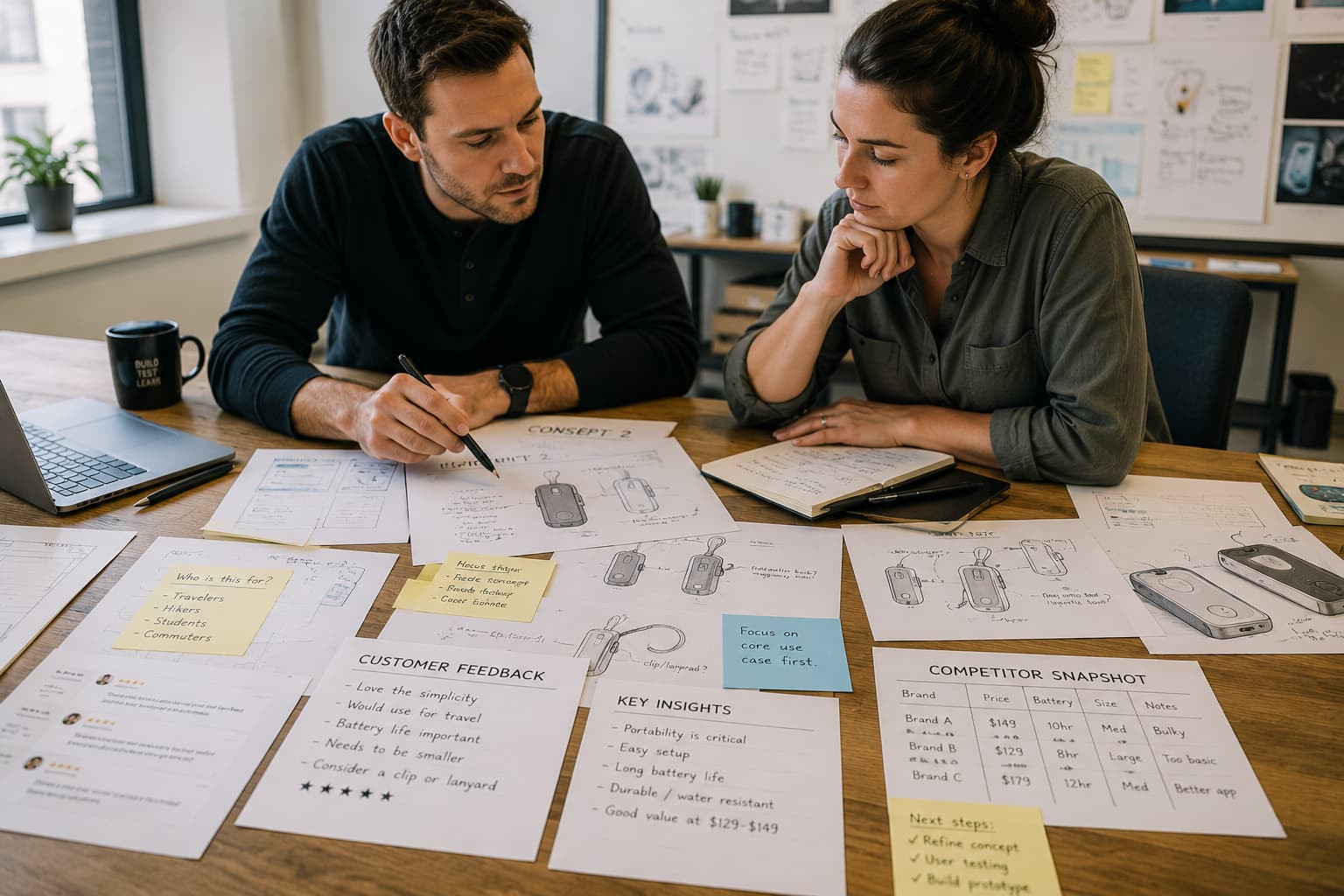 A third mistake is jumping too quickly into expensive activity because it feels like progress. Patents, prototypes, industrial design, and supplier conversations can all be appropriate later. But if the product idea itself has not been tested against market reality, those steps may simply make the mistake more expensive. The SBA specifically notes that market research is useful for confirming and improving a business idea before you get too far down the road.
This is also where validation connects directly to product strategy. A founder may discover that the market is real, but the current version of the product is too expensive, too broad, too niche, or too hard to explain. That is not failure. That is exactly what validation is supposed to reveal.
A Simple Validation Process for Early Product Ideas
You do not need perfect certainty before moving forward. You do need enough evidence to make the next decision intelligently.
A simple early-stage validation process often looks like this:
- Write down the core idea clearly. Define the problem, user, and expected value in plain English.
- Identify the target user. Get more specific than “everyone.”
- Review the market. Study current alternatives, substitutes, and competing products.
- Talk to likely users. Listen for real pain, not polite enthusiasm.
- Pressure-test the economics. Think about likely price range, cost sensitivity, and whether the product can support a viable business model.
- Refine the concept. Adjust the product before expensive development begins.
This is one reason early product work should stay connected to broader business thinking. The SBA’s guidance makes clear that market research and competitive analysis help businesses improve ideas and understand customers from the outset. Validation should not be treated as a side exercise. It should shape the product itself.
Signs Your Idea Is Not Ready for Development Yet
- You cannot clearly explain the customer.
- You do not know how the problem is solved today.
- You have not pressure-tested pricing assumptions.
- You are relying mostly on supportive feedback from friendly audiences.
- You cannot explain why this product would win attention in a crowded market.
When You Have Enough to Move Forward
Validation does not end in a dramatic moment. Usually, it ends when the founder has enough clarity to justify the next layer of work.
That may mean moving into concept refinement, early prototype planning, manufacturability thinking, or broader development strategy. It does not mean all risk is gone. It means the idea has earned a smarter next step.
If you need a broader view of how product work fits into the studio model, What Is a Venture Studio? How the Model Works for Product Innovation is a useful starting point. If you want a practical look at what a broader development partner actually does once an idea is worth pursuing, What Does a Product Development Company Actually Do? helps frame that next stage.
This is also where the “idea to market” path becomes real. Once the idea has been validated enough to deserve further investment, the next question is not whether to daydream harder. It is what should be built, tested, or defined next.
Validate Before You Spend
If your team needs a clearer read on whether a product idea is ready for real development, Ahdept can help you pressure-test the concept before expensive work starts stacking up.
FAQ
How do you validate a product idea before building it?
You validate it by testing the problem, customer, alternatives, and value proposition before moving into expensive development. That often includes market review, competitive research, early customer conversations, and basic economic reality checks.
What is the difference between product validation and product development?
Validation is about reducing uncertainty before heavy execution begins. Product development is the deeper work of refining, designing, prototyping, and preparing the product for market.
Do I need a prototype to validate a product idea?
No. In many cases, the earliest validation work should happen before a prototype exists. A prototype may become useful later, but the problem, customer, and value proposition should be tested first.
When should a founder move from validation to development?
A founder should move forward when the idea has enough evidence behind it to justify the next level of time, money, and execution. The goal is not total certainty. It is smarter decision-making.
Our Office
450 N. Flint Street
Kaysville, UT 84037, USA
Contact Us
(385) 566-1877
info@ahdept.com
Careers
Office Hours
Mon-Fri: 8am - 5pm
Sat-Sun: Closed