Rapid Prototyping Services for Physical Product Development
Rapid prototyping services help product teams move from digital designs to physical parts that can be handled, assembled, tested, and improved. The right service is not simply the fastest way to make a part. It is the method that produces the evidence needed for the next product decision.
A CAD model can communicate shape, dimensions, and internal structure, but a physical prototype reveals how the product behaves in the real world. It gives engineers, founders, users, and manufacturing partners a shared object they can evaluate together.
Modern rapid prototyping may involve 3D printing, CNC machining, molded parts, sheet fabrication, electronics integration, or a combination of processes. Choosing among them depends on what the prototype must prove, how closely it needs to represent production, and what the team plans to do with it.
What Are Rapid Prototyping Services?
Rapid prototyping services convert product designs into physical models without requiring the full investment associated with production tooling or volume manufacturing. They allow teams to build limited quantities, evaluate a design, make revisions, and produce another iteration relatively quickly.
The word rapid is relative. Some simple printed parts can be produced quickly, while a functional assembly involving machined components, electronics, finishing, and testing may take considerably longer. The important advantage is that the team can learn before committing to production-scale processes.
The NIST Manufacturing Extension Partnership identifies rapid prototyping and design iteration as important uses of additive manufacturing because they can bypass the tooling lead times and costs associated with conventional production methods.
However, additive manufacturing is only one part of rapid prototyping. A capable development partner should select the process based on the prototype’s purpose rather than forcing every project through the same equipment.
Rapid Prototyping Services Can Support
- Early proof-of-concept development
- Appearance and ergonomic models
- Mechanical fit and assembly evaluation
- Functional engineering prototypes
- Electronics and sensor integration
- User testing and design validation
- Material and process comparisons
- Low-volume pilot and presentation units
- Production-intent design verification
Start With the Question the Prototype Must Answer
The first decision is not which machine should make the prototype. It is what the product team needs to learn.
A founder who wants to evaluate size and appearance may need a very different prototype from an engineering team testing mechanical loads. A product being shown to investors may require a clean visual model, while a product approaching manufacturing may need production-intent materials, controlled tolerances, and fully integrated components.
Trying to satisfy every objective with one prototype can make the build more expensive and less useful. A polished appearance model may hide mechanical compromises. A rough functional prototype may operate correctly but communicate the product poorly in a customer presentation.
Before requesting rapid prototyping services, define the primary question:
- Does the concept work?
- Will the product fit the intended user or environment?
- Do the parts align and assemble correctly?
- Can the mechanism withstand the expected load?
- Will the electronics fit and perform inside the enclosure?
- Does the product communicate its purpose clearly?
- Can the design advance toward a production process?
Clear questions help the prototyping partner recommend the right fidelity, material, process, and number of units.
Common Types of Physical Product Prototypes
Prototype labels vary between providers, but most builds fall into several practical categories.
Proof-of-Concept Prototypes
A proof of concept isolates the product’s central technical idea. It may look little like the finished product because appearance is not yet the priority. The objective is to determine whether a mechanism, circuit, sensor, material, or physical principle can perform as expected.
Appearance and Ergonomic Models
Appearance models communicate the product’s proposed size, shape, proportion, color, and finish. Ergonomic models help teams evaluate grip, reach, balance, comfort, visibility, and physical interaction.
These prototypes may have limited functionality, but they can be valuable for user feedback, design reviews, photography, investor conversations, and internal approval.
Functional Prototypes
Functional prototypes recreate the product behaviors that carry the greatest technical risk. They may test motion, force, stability, power consumption, wireless communication, thermal performance, controls, or interaction between components.
A functional prototype does not always use production materials or final geometry. It should still reproduce the conditions needed to evaluate the intended function accurately.
Engineering Prototypes
Engineering prototypes integrate more of the complete product system. Mechanical components, electronics, firmware, controls, and enclosure parts begin working together in a form closer to the planned product.
These builds help identify integration problems that isolated prototypes cannot reveal. They may also support structured verification, durability testing, and preparation for design transfer.
Production-Intent Prototypes
A production-intent prototype uses materials, dimensions, components, and processes that more closely represent the planned manufactured product. It may support final fit checks, compliance testing, packaging development, manufacturing review, or pilot production planning.
The closer a prototype moves toward production intent, the more important documentation, revision control, inspection, and supplier coordination become.
Common Rapid Prototyping Methods
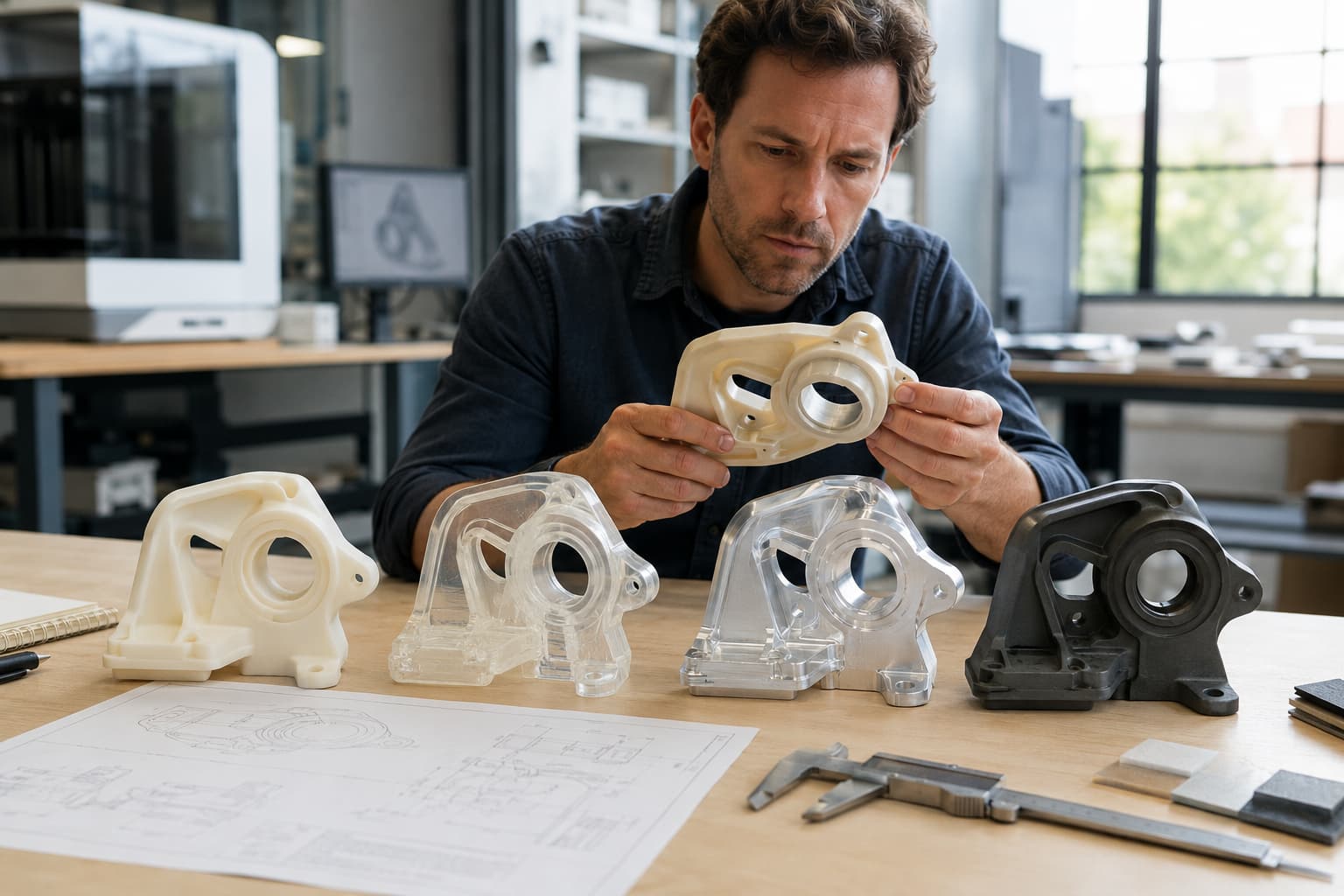
No single rapid prototyping method is best for every product. Each process has different strengths, material options, tolerances, finishes, costs, and lead times.
3D Printing and Additive Manufacturing
3D printing builds parts layer by layer from digital files. Depending on the process, it can produce inexpensive concept models, detailed resin parts, durable polymer components, flexible parts, or metal prototypes.
Additive manufacturing is especially useful for complex geometry, internal features, quick design revisions, and low quantities. However, printed material properties, surface finish, dimensional accuracy, and strength can differ from production-molded or machined parts.
CNC Machining
CNC machining removes material from a solid block to produce a finished part. It is useful when the prototype requires tight tolerances, production-grade plastics or metals, accurate interfaces, or mechanical properties closer to the final product.
Machined prototypes often cost more than basic printed parts, but they can provide more meaningful results when material behavior, dimensional precision, or surface quality matters.
Sheet Fabrication and Laser Cutting
Products involving brackets, panels, frames, guards, or enclosures may benefit from laser cutting, bending, welding, or other sheet fabrication methods. These processes can produce functional metal assemblies without requiring production stamping tools.
Molding and Casting
Silicone molds and cast urethane parts can be useful when a team needs several similar prototype units, molded-like surface quality, color options, or material behavior that basic 3D printing cannot provide.
Low-volume molding methods can support user trials, sales samples, pilot units, and limited field testing before production tooling is justified.
Electronics and Integrated Assemblies
Connected products often require more than enclosure parts. Prototyping services may include breadboards, development boards, custom circuit boards, wiring, sensors, batteries, displays, firmware, and mechanical integration.
Mechanical and electrical development should not occur in isolation. Connector access, antenna placement, heat, power, wiring clearances, component mounting, and enclosure geometry can affect the complete product.
What a Prototyping Partner Needs From You
The quality of a prototype request affects the accuracy of the quote and the usefulness of the finished parts. A vague request to “make this design” leaves critical assumptions unresolved.
Useful project inputs may include:
- CAD files, drawings, sketches, or reference models
- The purpose of the prototype
- Required quantity
- Critical dimensions and tolerances
- Material or performance requirements
- Expected loads and use conditions
- Cosmetic and surface-finish expectations
- Components that must fit inside or attach to the prototype
- Testing planned after delivery
- Budget and deadline constraints
If the design is still early, the provider may need to perform engineering work before the parts are ready to build. Repairing incomplete CAD, adding manufacturing geometry, specifying tolerances, and preparing assemblies are product-development services, not simply machine time.
What Determines Rapid Prototyping Cost?
Rapid prototyping costs vary widely because prototypes serve different purposes. A single appearance model and an integrated engineering prototype are not comparable projects.
Common cost factors include:
- Part size and total material volume
- Number and complexity of components
- Chosen prototyping process
- Material requirements
- Dimensional tolerances
- Surface finishing and color matching
- Quantity of identical parts
- Assembly and hardware installation
- Electronics and firmware development
- Testing, inspection, and documentation
- Engineering work required before fabrication
- Expedited scheduling
The lowest-cost process is not necessarily the most economical choice. A cheap prototype made with the wrong material or insufficient accuracy may produce misleading results and require an additional build.
How the Rapid Prototyping Process Works
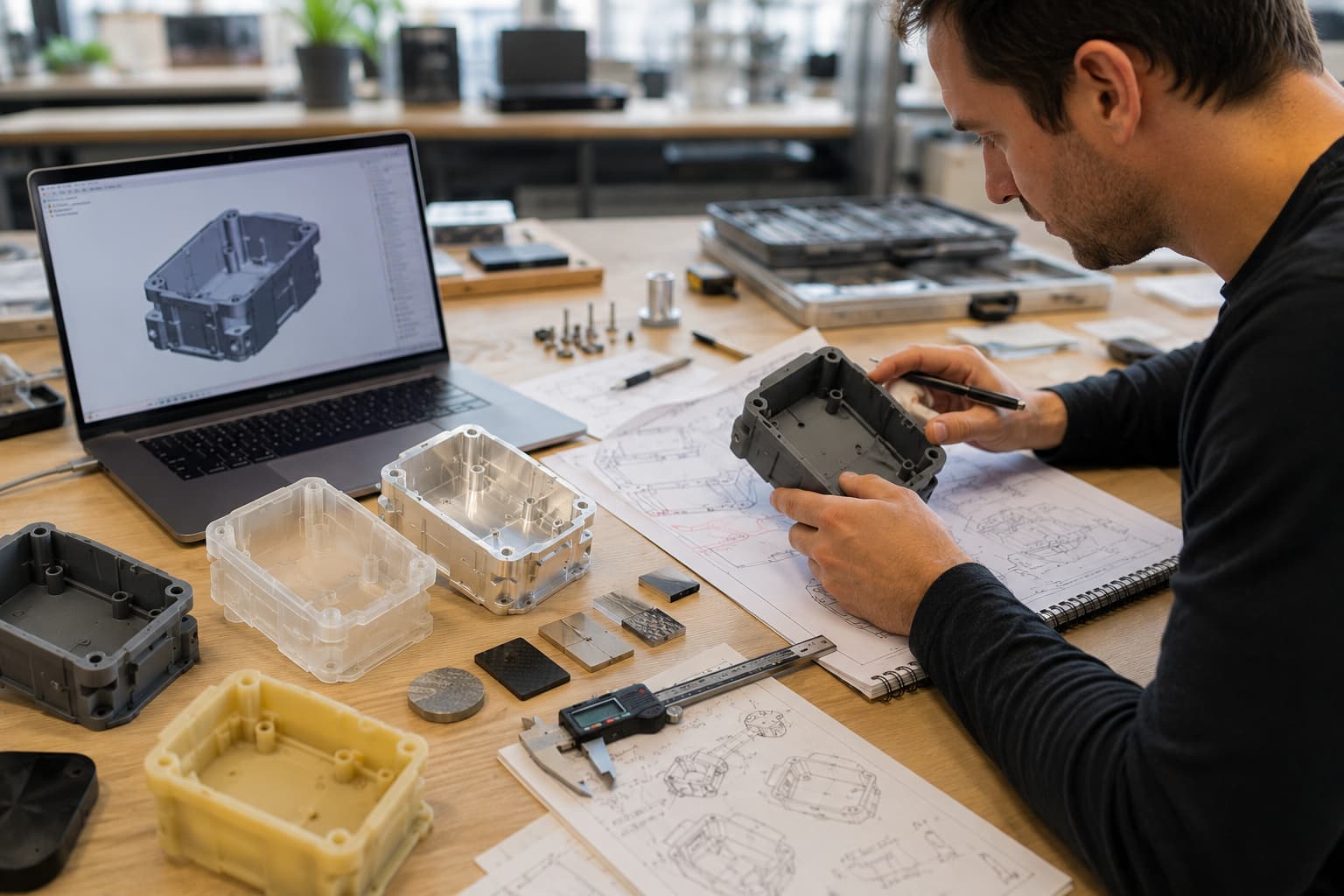
A well-managed rapid prototyping project usually follows a short but deliberate development cycle.
- Define the objective. Identify the assumption, risk, or product decision the prototype must address.
- Review the design. Evaluate CAD, materials, dimensions, interfaces, and build requirements.
- Select the process. Match the fabrication method and material to the desired evidence.
- Prepare the files. Resolve geometry issues, orientation, tolerances, supports, tooling, or assembly details.
- Fabricate and inspect. Produce the parts and confirm critical dimensions or specifications.
- Assemble and test. Integrate components and evaluate the prototype under planned conditions.
- Document the results. Record measurements, observations, failures, and recommended revisions.
- Revise or advance. Build another iteration or move the validated design toward manufacturing.
The fabrication step may be fast, but the work before and after it determines whether the prototype produces useful information.
For a closer look at testing and iteration after the prototype is built, read From Idea to Market, Stage 3: Prototyping, Testing, and Early Iteration.
How to Evaluate a Rapid Prototyping Provider
A prototyping provider should be evaluated on more than equipment and turnaround time. The right partner should understand why the prototype is being built and how the results will affect the broader product-development process.
Ask potential providers about:
- Experience with similar products, materials, or mechanisms
- The range of available fabrication methods
- Engineering support before fabrication
- How they recommend materials and processes
- Inspection and quality-control capabilities
- Assembly, finishing, and electronics integration
- How design revisions are documented
- Confidentiality and intellectual property practices
- Whether they can support later manufacturing preparation
A provider that only receives files and returns parts may be sufficient for a mature design. Earlier-stage projects often benefit from a product-development partner who can identify design problems, recommend the appropriate prototype, and connect the results to later engineering and manufacturing decisions.
Rapid Does Not Mean Rushed
Speed is useful when it shortens the path to reliable information. It becomes a problem when teams skip design review, choose a process without understanding its limitations, or build parts before defining what will be tested.
The purpose of rapid prototyping is not to make the final product immediately. It is to create focused learning cycles that improve the product and justify the next investment.
That distinction also prevents costly mistakes. The previous article, How Hardware Prototyping Reduces Costly Product Development Mistakes, explains how physical prototypes expose usability, assembly, material, and performance problems before they reach tooling or production.
Moving From Prototype to Manufacturing
Rapid prototyping services are most valuable when they are connected to a larger product-development plan. Each build should reduce uncertainty, improve the design, and move the team closer to a clear manufacturing decision.
A prototype may be ready to advance when its intended questions have been answered, critical functions perform consistently, major fit and usability issues have been resolved, and the team understands which additional validation is required.
Before production begins, prototype findings must be converted into controlled CAD, drawings, bills of materials, assembly requirements, testing procedures, and quality standards. That transition is covered in From Idea to Market, Stage 4: Preparing for Manufacturing and Launch.
The best rapid prototyping service does more than produce a physical part. It helps the team learn what the product needs, resolve uncertainty, and make the next decision with better evidence.
Build the Right Prototype for the Next Decision
Ahdept helps founders and product teams choose the right prototyping approach, develop physical and functional prototypes, test critical assumptions, and prepare validated designs for manufacturing.
Our Office
450 N. Flint Street
Kaysville, UT 84037, USA
Contact Us
(385) 566-1877
info@ahdept.com
Careers
Office Hours
Mon-Fri: 8am - 5pm
Sat-Sun: Closed