
Turnkey Product Development, Pros, Cons, and When It’s the Right Fit
Turnkey product development gives founders one coordinated partner for the work required to move a product from an early opportunity through design, engineering, prototypes, manufacturing preparation, and launch. It can reduce fragmented handoffs and internal management demands, but it is not the right engagement model for every product or team.
Developing a physical product requires more than hiring someone to design an enclosure, build a prototype, or locate a manufacturer. The customer need, business model, technical architecture, materials, components, testing, production process, and launch plan all affect one another.
A founder can coordinate each of those areas independently. For some teams, that is the right approach. Others need a partner capable of managing the relationships among them.
That is the basic promise of turnkey product development.
The term can also be misleading. Turnkey should not mean handing an idea to a vendor, disappearing for several months, and receiving a finished product that is ready to sell. Physical products require decisions, evidence, iteration, and founder involvement.
A credible turnkey model creates one coordinated development path while keeping the client informed and involved at the decisions that shape the product and business.
What Is Turnkey Product Development?
Turnkey product development is an engagement model in which one primary partner coordinates most or all of the services needed to move a product from concept toward production and commercialization.
The partner may perform some capabilities internally and coordinate specialized outside resources for others. The important distinction is that the client is not left to manage every technical interface, vendor handoff, and development dependency independently.
Depending on the product and engagement, turnkey support may include:
- Market and customer validation
- Product strategy and requirements
- Industrial design
- Mechanical engineering
- Electrical engineering
- Firmware and embedded systems
- Software and connected platforms
- Prototype development
- Verification and validation testing
- Design for manufacturing
- Component and supplier sourcing
- Production documentation
- Tooling and manufacturing coordination
- Pilot production
- Packaging and launch preparation
- Post-launch product improvements
The NIST Manufacturing Extension Partnership similarly presents product development as a connected path involving market validation, development, prototyping, testing, manufacturing, distribution, and launch.
A turnkey partner should understand that complete path, even when the immediate engagement begins with only one stage.
Turnkey Does Not Mean the Founder Becomes Passive
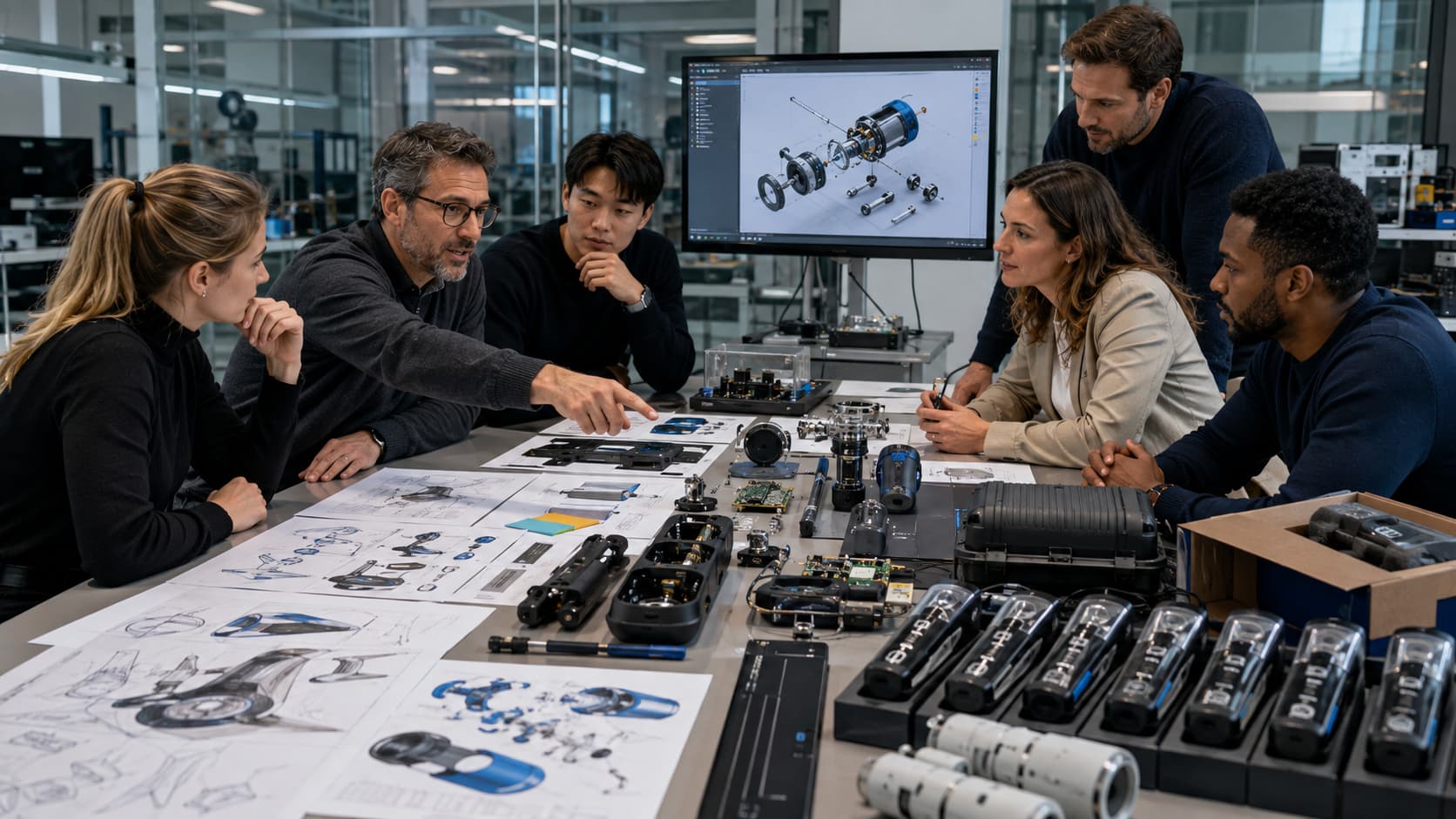
A good turnkey engagement reduces the founder’s coordination burden. It does not remove the founder from the process.
The development team can analyze options, identify risks, produce evidence, and make recommendations. The founder still needs to provide business context and make decisions related to:
- The target customer
- The problem worth solving
- The acceptable product experience
- Feature and performance priorities
- Pricing and cost targets
- Funding and schedule constraints
- Risk tolerance
- Distribution and launch strategy
No development partner understands the founder’s vision, customer relationships, or business objectives automatically. Those inputs must become part of the requirements and decision process.
The strongest relationship is collaborative. The partner owns the development process and technical coordination. The founder remains accountable for the product and business decisions only the founder can make.
Advantage 1: One Accountable Development Path
When founders hire separate industrial designers, engineers, prototype vendors, testing laboratories, and manufacturers, they often become the connection between every participant.
That can create uncertainty about who owns an interface or decision.
The industrial designer may assume an engineer will resolve the internal layout. The engineer may assume the manufacturer will adjust the design for production. The manufacturer may assume the design files have already been verified. Each participant can complete an assigned task while the complete product remains uncoordinated.
A turnkey partner provides a central point of responsibility for requirements, technical interfaces, development priorities, revisions, test results, documentation, and manufacturing preparation.
This does not guarantee that problems will not occur. It makes it clearer who is responsible for identifying, communicating, and resolving them.
Advantage 2: Fewer Knowledge Gaps Between Stages
Every handoff creates an opportunity for context to be lost.
A new vendor may receive the latest CAD files without understanding why a feature was designed a particular way. A manufacturer may suggest a material change without knowing which performance requirement drove the original selection. A software team may build around an outdated electrical interface.
Turnkey product development can preserve the history behind the product:
- Which customer needs shaped the requirements
- Which concepts were explored and rejected
- Which technical risks have been tested
- Why materials and components were selected
- What failures occurred during prototyping
- Which requirements remain unverified
- Which manufacturing assumptions still need confirmation
This continuity becomes increasingly valuable as the product moves from early concepts into integrated engineering and production preparation.
Advantage 3: Engineering and Manufacturing Can Develop Together
A fragmented process often treats manufacturing as the final destination for a completed design. By then, important decisions about geometry, materials, tolerances, components, assembly, inspection, and tooling may already be difficult to change.
A turnkey team can bring manufacturing considerations into the project while the design is still developing.
That may include:
- Evaluating processes during concept development
- Reviewing materials and component availability
- Estimating tooling and unit costs
- Identifying difficult assembly operations
- Reducing unnecessary part count
- Planning quality inspections and production testing
- Comparing domestic and international supply options
- Aligning the design with expected production volume
This is the practical value of design for manufacturing. Manufacturing is treated as a product requirement rather than a problem to solve after engineering ends.
Advantage 4: The Team Can Prioritize Risks Across Disciplines
Physical product risks do not exist in neat professional categories. A mechanical change may affect wireless performance. A larger battery may alter the enclosure, charging system, weight, shipping requirements, and cost. A supplier issue may require electrical, firmware, and mechanical revisions.
If each vendor focuses only on an assigned discipline, no one may be evaluating the complete system.
An integrated turnkey partner can compare technical, customer, manufacturing, schedule, and commercial risks together. The team can then select the prototype or analysis most likely to reduce the greatest uncertainty.
This is especially important for multidisciplinary hardware. Our guide to product engineering services explains how mechanical, electrical, firmware, and software decisions must remain connected throughout development.
The value of turnkey development is not simply having more services available. It is having those capabilities work from the same requirements, evidence, and product strategy.
Advantage 5: Founders Gain Flexible Development Capacity
Building an internal product team requires recruiting, compensation, tools, facilities, management, and enough ongoing work to support multiple specialized roles.
A founder may need mechanical engineering during one stage, electrical and firmware expertise during another, and sourcing or manufacturing support later. The required workload can also increase or decrease as the project moves through prototype cycles and decision gates.
A turnkey development partner can provide access to those capabilities as the project requires them.
This can be particularly useful for:
- Early-stage companies without an internal engineering team
- Established businesses entering an unfamiliar product category
- Teams with strong internal expertise but limited capacity
- Companies developing a physical product for the first time
- Organizations that need temporary multidisciplinary support
The client gains a broader development team without immediately building every capability internally.
Potential Disadvantage 1: The Engagement Can Become a Black Box
The greatest risk in a turnkey engagement is losing visibility into how decisions are being made.
A weak provider may deliver polished updates without showing unresolved risks, alternatives considered, test limitations, or manufacturing assumptions. The client may not discover missing documentation or unverified requirements until the project changes hands or reaches production.
Founders should expect access to:
- Current product requirements
- Development plans and major dependencies
- Design review findings
- Prototype objectives and test results
- Risk and issue tracking
- Revision history
- Supplier and manufacturing assumptions
- Current technical files and documentation
Turnkey should simplify coordination, not hide the development process.
Potential Disadvantage 2: The Client Can Become Too Dependent on One Partner
Concentrating development responsibility creates continuity, but it can also create dependency.
If the provider controls the files, source code, supplier relationships, tooling, or technical knowledge, changing partners may become difficult. Founders should understand ownership and access before work begins.
Important questions include:
- Who owns the CAD, drawings, code, and documentation?
- Who owns production tooling and test fixtures?
- Will the client receive editable source files?
- Can the client communicate directly with key suppliers?
- How will information be transferred if the engagement ends?
- Are third-party licenses or proprietary platforms required?
A professional turnkey partner should create portability, even when the client intends to maintain a long-term relationship.
Potential Disadvantage 3: Turnkey Support May Cost More Up Front
A coordinated engagement can appear more expensive than hiring a narrow specialist for the immediate task.
The comparison may not be equal.
A lower quotation might exclude project management, engineering reviews, supplier coordination, testing, documentation, design revisions, or manufacturing support. Those activities do not disappear. The founder either manages them internally or pays for them later.
The right cost comparison should consider:
- The complete scope of work
- Internal management time
- Additional vendors that will be required
- Rework caused by incomplete handoffs
- Files and documentation delivered
- Support during testing and manufacturing
- The cost of delayed or incorrect decisions
Turnkey development is not automatically less expensive. Its financial value comes from coordination, continuity, risk reduction, and avoiding duplicated or misaligned work.
Potential Disadvantage 4: A Broad Provider May Not Be Deep in Every Specialty
No product development company is the best possible specialist in every technical field, manufacturing process, certification, or market.
A credible turnkey partner should know where its internal capabilities are strong and where specialized expertise is required. It should be able to identify, evaluate, and coordinate those specialists without pretending every capability exists under one roof.
Founders should ask how the partner handles:
- Specialized technical problems
- Regulatory and certification testing
- Tooling and manufacturing selection
- Industry-specific requirements
- Outside laboratories and consultants
- Supplier qualification
The partner’s job is not to avoid outside expertise. It is to integrate that expertise without losing product ownership or development continuity.
Potential Disadvantage 5: The Scope Can Be Larger Than the Client Needs
Not every project requires a full turnkey engagement.
A company may already have a capable internal product team and need only a specialized engineering analysis, prototype, certification test, or manufacturing supplier. A design may already be fully documented and require a specific production service.
Hiring a full-lifecycle team for a narrow, well-defined problem can add unnecessary cost and process.
A good partner should be willing to recommend a focused engagement when that is the better fit. Turnkey capability should not mean forcing every client into the largest available scope.
When Turnkey Product Development Is the Right Fit
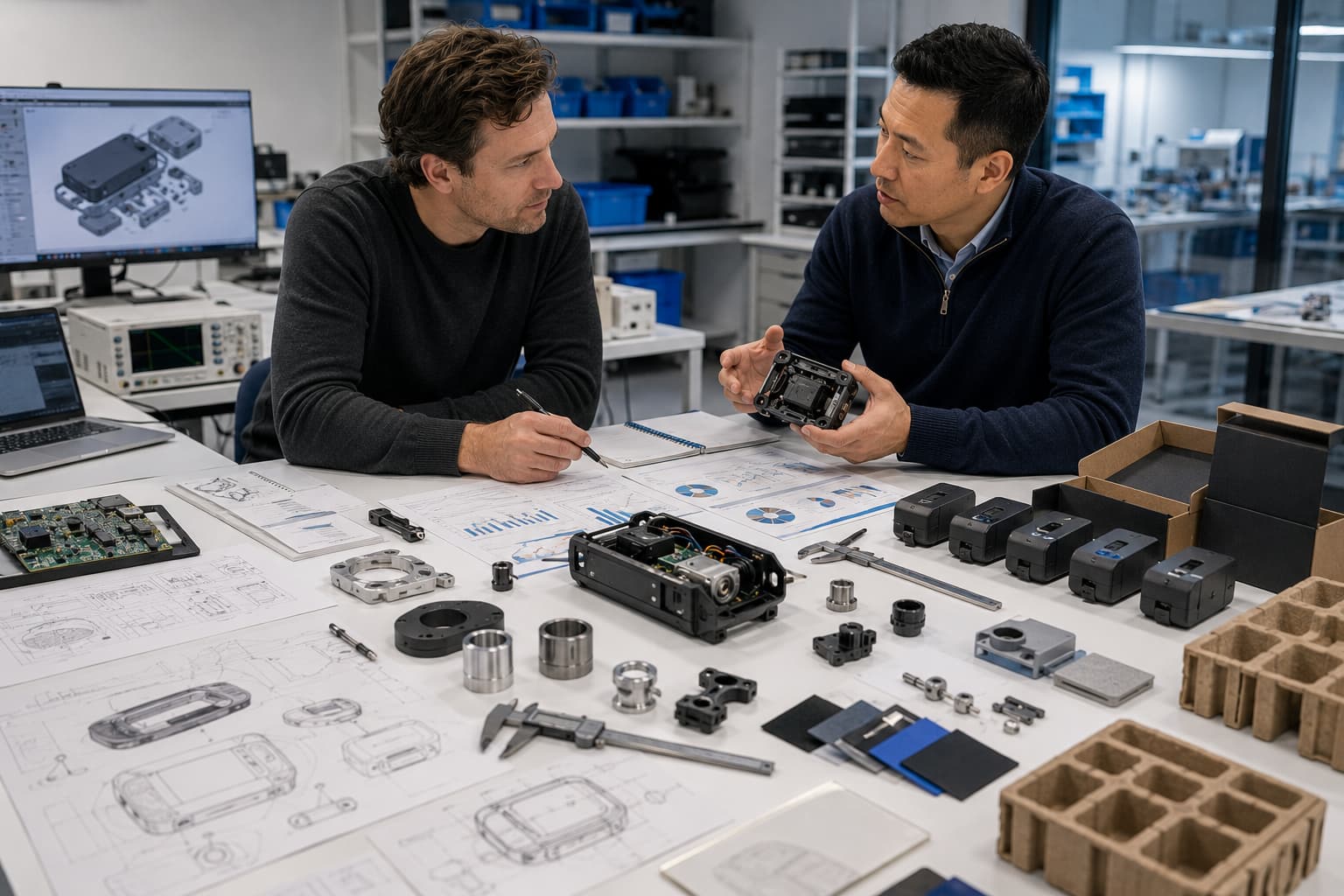
Turnkey product development is usually a strong fit when several of the following conditions are present:
- The product combines mechanical, electrical, firmware, or software systems
- The requirements are still evolving
- The team needs help defining the product, not only executing a finished specification
- The founder does not have an experienced internal development leader
- Multiple vendors are creating coordination problems
- Manufacturing decisions will strongly affect design and cost
- The product has meaningful technical, safety, regulatory, or supply chain risks
- The company needs support through prototypes, pilot production, and launch
- Internal resources are capable but already committed elsewhere
- The founder wants one accountable path across development stages
The model is particularly valuable when the central challenge is not completing one task, but deciding which task should happen next and how it affects the rest of the product.
When a Turnkey Model May Not Be Necessary
A focused specialist or internal team may be the better choice when:
- The product requirements and technical architecture are already stable
- The remaining task is narrow and clearly defined
- The company has strong internal program and technical leadership
- Manufacturing documentation is complete and controlled
- The team already has qualified supplier relationships
- The work requires one highly specialized capability
- The client wants to maintain direct control of every vendor relationship
The choice is not between a good turnkey model and a bad collection of specialists. Both structures can work. The deciding factor is whether the client can effectively own the interfaces, decisions, and handoffs between the specialists.
What a Turnkey Product Development Agreement Should Clarify
Before work begins, the engagement should establish more than budget and schedule.
The agreement or supporting scope should clarify:
- Which development stages are included
- Which services are performed internally
- Which services may involve outside specialists
- What assumptions the plan depends on
- What deliverables will be produced
- How requirements and changes will be controlled
- How prototype and testing costs are approved
- How suppliers and manufacturers are selected
- Who owns intellectual property, files, code, tooling, and documentation
- Which decisions require client approval
- What happens when testing reveals a major problem
- What support continues during manufacturing and launch
Physical product development contains uncertainty. The scope should not pretend every outcome can be predicted. It should explain how uncertainty, changes, and decision gates will be managed.
Questions to Ask a Turnkey Product Development Partner
Founders can learn more from a provider’s process than from its service list.
Ask questions such as:
- How do you determine whether the product opportunity is worth pursuing?
- How do you translate customer needs into technical requirements?
- How do you prioritize the highest development risks?
- What does the client need to own during the engagement?
- How are design decisions and changes documented?
- How do you decide what each prototype should prove?
- When do manufacturing and sourcing specialists become involved?
- How will we review progress and approve major decisions?
- Which files and documentation will we receive?
- How do you support pilot production and early manufacturing issues?
- What happens if a specialized capability is needed?
- How do you transfer the product if we later build an internal team?
Clear answers indicate that the partner has an operating model, not merely a collection of services.
How Ahdept Approaches Turnkey Product Development
Ahdept approaches turnkey development as a hands-on partnership rather than a closed outsourcing arrangement.
We help founders define what must be true for the product and business to work. We coordinate the product strategy, design, engineering, prototypes, testing, manufacturing preparation, and commercialization work required to answer those questions.
The founder remains involved at the decision points that shape customer value, investment, risk, and product direction. Ahdept’s role is to provide the technical context, evidence, recommendations, and coordinated execution needed to make those decisions responsibly.
We also recognize that not every project needs every service at once. An engagement may begin with validation, technical feasibility, product engineering, or manufacturing preparation. The work should match the actual stage and uncertainty of the product.
This reflects the broader process of product realization. The goal is not to complete isolated deliverables. It is to connect the right decisions and capabilities from opportunity through production and market launch.
The Right Model Creates Control, Not Distance
Turnkey product development can give founders one accountable path through a complicated physical product journey. Its advantages include continuity, coordinated engineering, earlier manufacturing input, flexible capacity, and fewer knowledge gaps.
Its risks include reduced visibility, dependency on one provider, unnecessary scope, and unclear ownership. Those risks can be managed through transparent decision-making, accessible documentation, defined client responsibilities, and clear ownership terms.
The right partner does not ask the founder to surrender control. It creates the structure, evidence, and technical coordination that allow the founder to exercise control more effectively.
Is Turnkey Development Right for Your Product?
Tell us what you are building, which capabilities you already have, and where the development process is breaking down. Ahdept can help determine whether you need full-lifecycle support or a focused engagement around the next critical stage.
Our Office
450 N. Flint Street
Kaysville, UT 84037, USA
Contact Us
(385) 566-1877
info@ahdept.com
Careers
Office Hours
Mon-Fri: 8am - 5pm
Sat-Sun: Closed