
Design for Manufacturing Explained for Founders and Product Teams
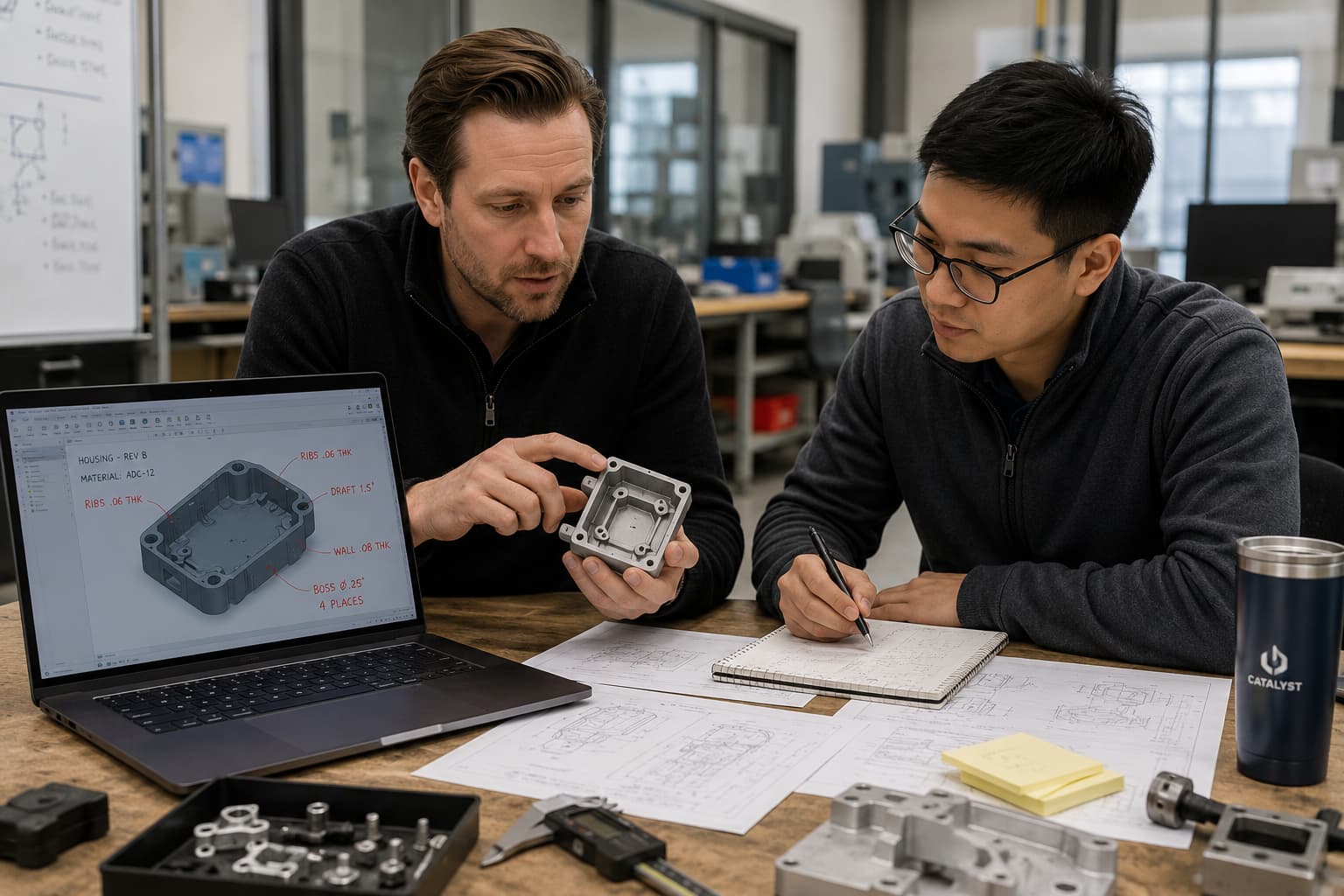 Design for manufacturing, often shortened to DFM, means shaping a product so it can be made reliably, efficiently, and at a cost that still makes business sense. For founders and product teams, that matters because a product that looks good in CAD or works in a prototype can still become expensive, fragile, slow to assemble, or difficult to scale.
DFM is not just an engineering buzzword. It is a way of thinking that asks manufacturing questions early, while the design is still flexible enough to improve. The goal is not to strip the product of ambition. It is to avoid building complexity into the product before the team understands what that complexity will cost.
If your product needs to move from idea to prototype to manufacturing and market, DFM should not be treated like a late-stage cleanup exercise. It should be part of the process from the beginning, which aligns with Ahdept’s broader focus on taking ideas from prototype to manufacture to market.
Table of Contents
What Is Design for Manufacturing?
Design for manufacturing means making design choices with the manufacturing process in mind. Instead of waiting until the product is supposedly finished and then asking whether it can be built, DFM asks that question while the product is still taking shape.
NIST notes that manufacturability depends on both functional and non-functional design parameters, and that there needs to be a feedback loop between product design and manufacturing process design. That is the clearest way to think about DFM. Product design and manufacturing cannot be treated as two separate conversations that happen in sequence. They influence each other the whole time.
In practical terms, DFM looks at things like part count, material choice, geometry, tolerances, assembly sequence, fastening methods, finishes, tooling implications, and how much variation the process can tolerate. Good DFM is often invisible to the end customer, but it shows up everywhere in cost, reliability, quality, and lead time.
Why It Matters So Early
A lot of manufacturing cost and difficulty gets locked in during design, not on the factory floor. NIST has published that major manufacturing costs are committed during product specification and design, which is why manufacturability and cost should be assessed as early as possible.
That matters because early design decisions do not just affect how the product looks. They affect:
- how many parts have to be produced and assembled
- what tools or molds may be required
- how easy the product is to build consistently
- how likely it is to fail in production or use
- how much labor, scrap, and rework get introduced later
Founders often assume those are later-stage problems. The reality is that they are often design-stage problems that only become obvious later, when they are harder and more expensive to fix.
What DFM Looks Like in Practice
DFM is not one single checklist item. It is a pattern of decisions. A strong product team keeps asking whether the current design is helping or hurting the path to production.
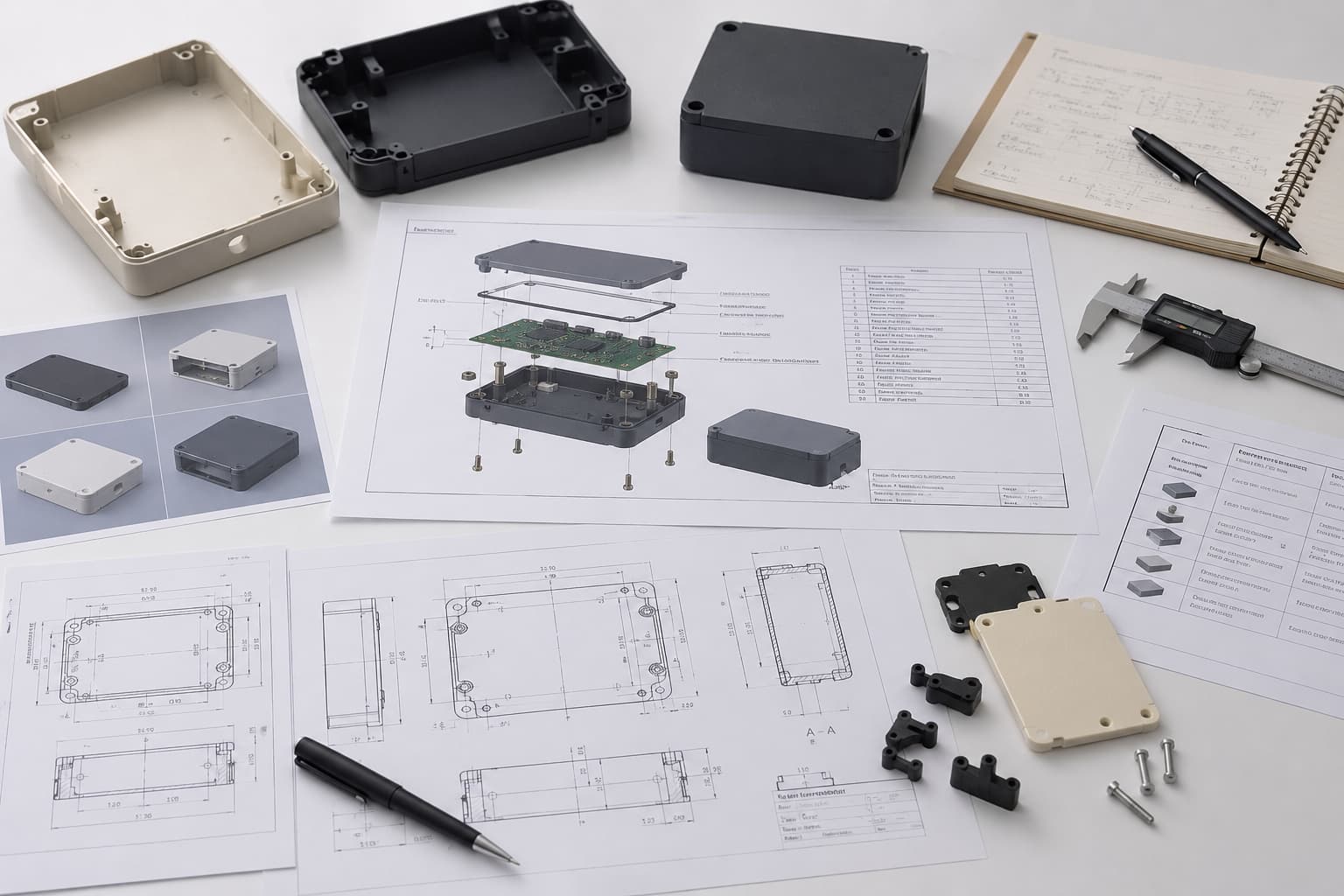 Sometimes that means reducing part count. Sometimes it means simplifying a geometry that is hard to tool or hard to assemble. Sometimes it means choosing a different material because the original choice looks great in a prototype but makes production slower or more expensive. Sometimes it means changing a feature because tolerance stack-up or process variation will make it unreliable at scale.
Good DFM also forces the team to think beyond the product itself. How will this be assembled? How many operations will that take? Does the design require extra handling, fixturing, or inspection? Will a supplier struggle to produce this consistently? Can the product be packaged and shipped without damage? If a part needs cosmetic quality, can the chosen process actually deliver it repeatably?
That is why DFM is not just a manufacturing topic. It is a product development topic. It sits right in the middle of design, engineering, cost, and commercialization.
Examples of DFM thinking
- combining parts that do not need to be separate
- avoiding tight tolerances where they are not functionally necessary
- choosing materials that support both performance and process reality
- designing assemblies that are easier to orient, handle, and fasten
- reducing fragile features that are easy to break during production
- planning around real supplier capabilities, not idealized assumptions
Common Mistakes That Create Manufacturing Problems
One common mistake is treating the prototype as proof that the product is ready. A prototype can prove function or concept, but that does not mean the design is ready for scalable production. This is where the DFM conversation overlaps with the earlier prototype-to-manufacturing discussion, but the emphasis here is slightly different. Prototype success can hide manufacturability problems if the design was never tested against real process constraints. You can see that broader transition discussed in Prototype to Manufacturing, What Has to Happen Before You Scale?.
Another mistake is over-designing. Founders sometimes equate more features or more complexity with more value. In manufacturing, extra complexity often means extra cost, more points of failure, more assembly time, and more ways for quality to drift.
A third mistake is separating engineering from business reality. The SBA notes that market research helps businesses confirm and improve ideas and reduce risk early. That matters here because manufacturability only matters in context. A design that is technically manufacturable but destroys margins or leads to a price the market will not support is still a problem.
A Simple Founder Checklist for DFM
- Can the current design be made consistently, not just once?
- Are there parts or features that add complexity without adding real value?
- Are tolerances tighter than they need to be?
- Do the chosen materials support both function and production reality?
- Is the assembly process straightforward, or does it create avoidable labor?
- Does the product still make financial sense once production constraints are included?
- Have supplier or process limitations been considered early enough?
Why Founders Should Care Even If They Are Not Engineers
Founders do not need to become manufacturing engineers overnight. But they do need to understand that manufacturability is not a side issue. It is one of the things that determines whether a promising product becomes a reliable business.
That is especially true for hardware, physical products, and connected products where the gap between a working prototype and a scalable product can be large. A founder who understands DFM asks better questions, makes better tradeoffs, and avoids spending money in the wrong order.
For a broader view of how product work fits into Ahdept’s model, see What Is a Venture Studio? How the Model Works for Product Innovation. If you want the more buyer-oriented explanation of what a broader development partner actually does, What Does a Product Development Company Actually Do? is also relevant.
Build for Manufacturability From the Start
If your product needs to move beyond concept and prototype toward something that can actually be built, scaled, and sold, Ahdept can help shape the path early so manufacturability is part of the design process, not an afterthought.
FAQ
What does design for manufacturing mean?
Design for manufacturing means designing a product so it can be produced reliably, efficiently, and at a realistic cost. It connects product design decisions to the realities of manufacturing processes, materials, assembly, and quality.
Why is DFM important early in product development?
Because many manufacturing problems and costs get locked in during design. The earlier a team considers manufacturability, the easier it is to simplify the product and avoid expensive redesigns later.
Is DFM only for large-scale manufacturing?
No. DFM matters even in early-stage product development because it helps teams avoid designing products that are hard to build, hard to scale, or too expensive to produce.
What is the difference between DFM and prototyping?
Prototyping helps test and learn. DFM focuses on whether the design can move into repeatable, practical production. A working prototype does not automatically mean the design is ready for manufacturing.
Our Office
450 N. Flint Street
Kaysville, UT 84037, USA
Contact Us
(385) 566-1877
info@ahdept.com
Careers
Office Hours
Mon-Fri: 8am - 5pm
Sat-Sun: Closed